Silver is the chemical element with symbol Ag and atomic number 47. It is a soft, lustrous precious metal with the highest electrical conductivity of any element and exceptional reflectivity for visible light.
Silver quick facts
| Property | Value |
| Symbol | Ag |
| Atomic number | 47 |
| Relative atomic mass | 107.868 |
| Group | 11 |
| Period | 5 |
| Block | d-block |
| Density | 10.5 g/cm³ |
| Melting point | 961.78°C |
| Boiling point | 2162°C |
| Electron configuration | [Kr] 4d¹⁰ 5s¹ |
| Common oxidation states | +1, +2 |
| CAS number | 7440-22-4 |
| Stable natural isotopes | ¹⁰⁷Ag, ¹⁰⁹Ag |
Position and electron configuration
Silver is in group 11, period 5 and the d-block. Its electron configuration is [Kr] 4d¹⁰ 5s¹. The +1 oxidation state is by far the most common in ordinary silver chemistry.
See the complete CleverlySmart periodic table.
Physical and electrical properties
Silver is malleable, ductile and easy to polish. It has the highest electrical conductivity and one of the highest thermal conductivities of all metals. It also reflects visible light extremely well, making polished silver useful in high-quality mirrors and optical coatings.
Silver does not oxidise readily in clean air, but it tarnishes when sulfur-containing compounds react with the surface to form dark silver sulfide.
Important silver compounds
- Silver nitrate (AgNO₃): an important laboratory reagent and precursor to many silver salts.
- Silver bromide (AgBr) and silver iodide (AgI): light-sensitive materials historically central to photography.
- Silver sulfide (Ag₂S): the dark material responsible for much silver tarnish.
- Silver nanoparticles: used in specialised antimicrobial coatings and materials, with environmental and exposure considerations depending on application.
Occurrence and production
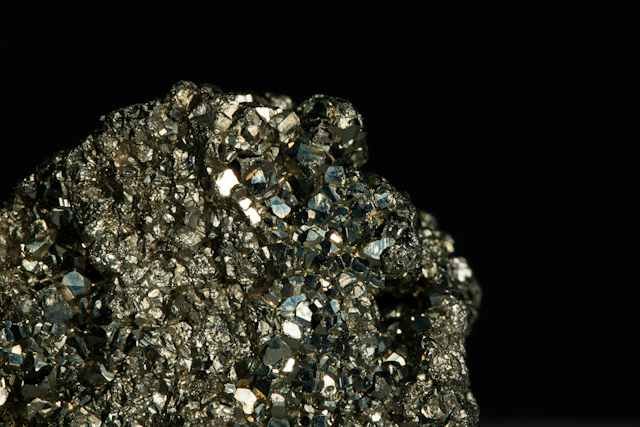
Silver occurs naturally as native metal and in minerals such as acanthite and chlorargyrite, but much commercial silver is recovered as a by-product of lead-zinc, copper and gold mining. Refining commonly includes flotation, smelting, chemical separation and electrorefining.
Uses of silver
- Electronics: contacts, conductive pastes, printed circuits and specialised electrical components.
- Jewellery and silverware: usually alloyed with copper for improved hardness; sterling silver contains 92.5% silver.
- Solar cells: silver pastes form highly conductive electrical contacts in many photovoltaic cells.
- Mirrors and optics: silver coatings provide very high visible-light reflectivity.
- Brazing and solder alloys: silver can improve flow, strength and corrosion resistance.
- Antimicrobial applications: silver ions can inhibit many microorganisms and are used in selected medical and consumer materials.
Silver isotopes
Natural silver contains two stable isotopes, ¹⁰⁷Ag and ¹⁰⁹Ag, in nearly equal proportions. Numerous radioactive isotopes are known and are used mostly in research or specialised tracer applications.
For broader isotope information, see the CleverlySmart isotope table.
Biological role and safety
Silver has no known essential biological role. Long-term excessive exposure to silver compounds can cause argyria, a persistent grey-blue discolouration of skin and tissues. Soluble silver salts can be hazardous, and nanoparticle risks depend on exposure route and formulation.
History and name
Silver has been mined and worked for thousands of years and was historically used for currency, jewellery and ritual objects. The symbol Ag comes from the Latin argentum.
Frequently asked questions
Why does silver tarnish?
Sulfur-containing gases and compounds react with silver to form dark silver sulfide on the surface.
Is silver the best electrical conductor?
Among elemental metals, silver has the highest electrical conductivity, although copper is usually chosen for bulk wiring because it is much less expensive.
Silver conductivity, optics and antimicrobial use
Silver has the highest electrical conductivity of any metal and also an exceptionally high thermal conductivity. Because it is more expensive than copper, it is usually reserved for high-performance contacts, conductive pastes, specialised electronics and applications where a thin silver layer is sufficient.
Polished silver is highly reflective across much of the visible and infrared spectrum, which is why silver coatings are used in mirrors and optical systems. Silver ions also have broad antimicrobial activity, so selected wound dressings, coatings and medical products use carefully controlled silver compounds or nanoparticles.
Tarnish and photographic chemistry
Silver does not react strongly with oxygen at room temperature, but sulfur-containing gases can form dark silver sulfide (Ag₂S) tarnish. Historically, light-sensitive silver halides such as AgBr and AgCl were fundamental to photographic film and paper.
Frequently asked questions
Why does silver tarnish?
Trace sulfur compounds in air react with the surface to form dark silver sulfide.
Why is copper used for most wiring instead of silver?
Copper conducts almost as well but is far cheaper and more abundant.