Proton Therapy: Precision Cancer Treatment with Fewer Side Effects
Proton therapy is an advanced form of radiation therapy used in modern cancer care. It delivers radiation to a tumor with high precision while limiting dose to nearby healthy tissue. This is especially helpful for children and for tumors located near critical organs.
What is it?
This treatment uses protons (charged particles) instead of traditional X-rays (photons). A key advantage is that protons can release most of their energy at a planned depth (the Bragg Peak) and then largely stop, which helps reduce radiation beyond the target.
How it works?
- Protons are accelerated using a cyclotron or synchrotron
- The beam is shaped to match the tumor’s size and depth
- The dose is concentrated on the target, helping spare nearby organs
Why patients choose this option?
- Less radiation exposure to healthy tissue
- Potentially fewer short-term side effects (depending on the treated area)
- Lower risk of some long-term complications, especially in children
- Useful when tumors sit close to sensitive structures (brain, spine, eye, heart)
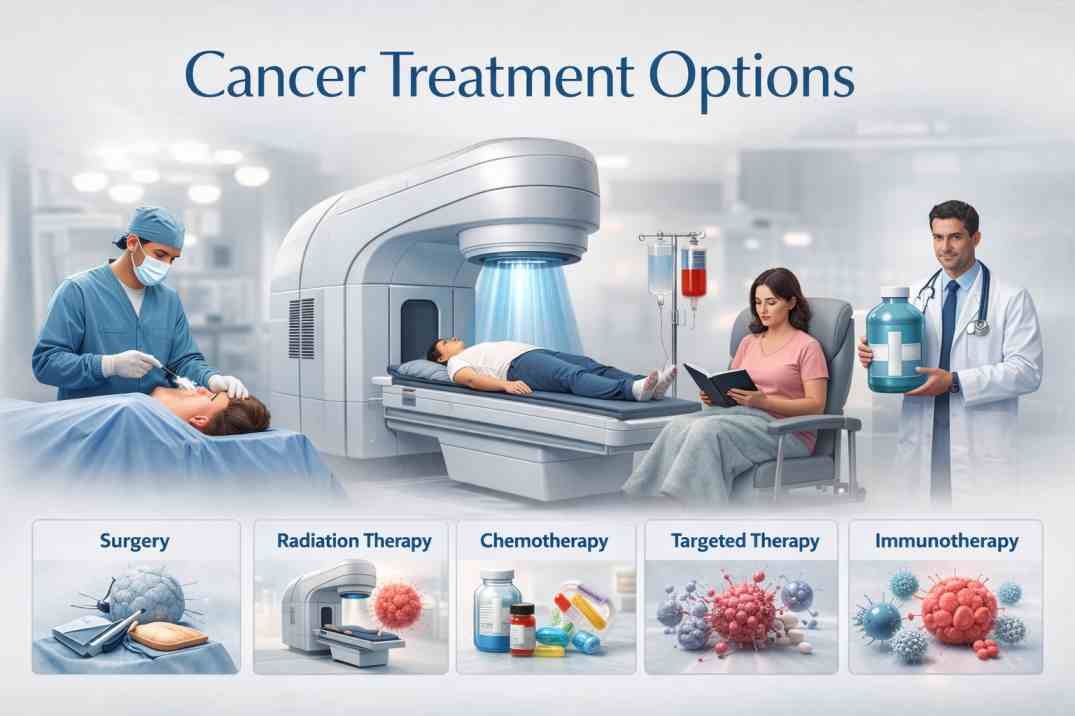
For a broader view of diagnosis and treatment paths, see cancer treatment options.
Which Cancers May Be Treated?
It’s commonly considered for cancers where tissue-sparing is critical, for example:
- Brain and spinal cord tumors
- Head and neck cancers
- Prostate cancer (selected cases)
- Breast cancer (selected cases)
- Eye tumors (ocular melanoma)
- Pediatric cancers
If you want to explore different cancer categories and terminology, start here:
Types of Cancer.
Compared with traditional radiation
Traditional X-ray radiation passes through the body, which can expose tissues in front of and behind the tumor. With protons, the dose can be planned to stop nearer the target, which may reduce unwanted exposure and improve quality of life during and after treatment.
Limitations and availability
Not every hospital offers this technology. Centers are expensive to build and operate, and insurance approval may vary. Your oncology team will decide suitability based on tumor type, location, stage, and your overall plan of care.

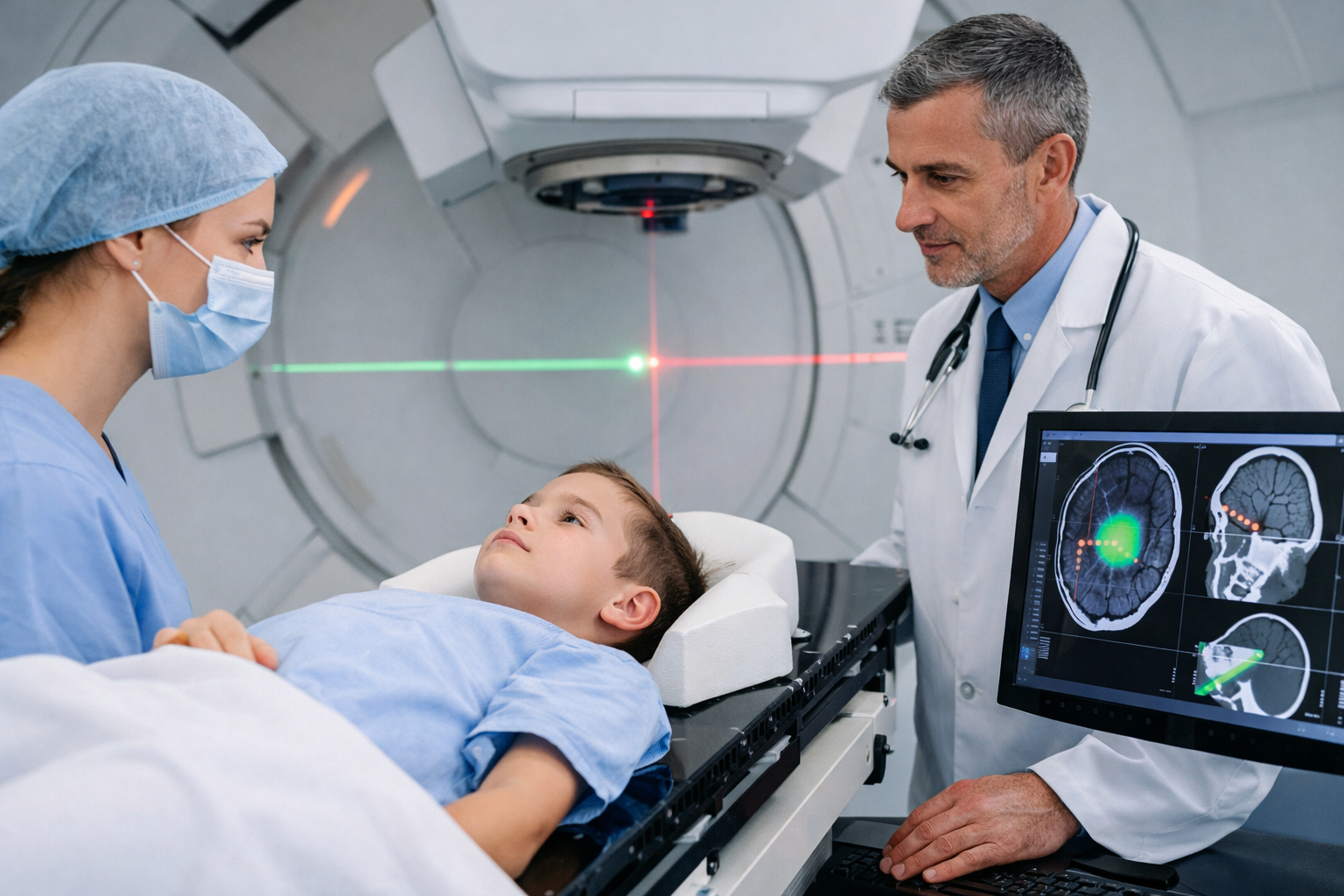
Treatment room for the MEVION S250i proton therapy unit. Romina.cialdella, CC BY-SA 4.0, via Wikimedia Commons
Where can you get treatments?
USA
- MD Anderson (Houston, TX): mdanderson.org
- Mayo Clinic (AZ & MN): mayoclinic.org
- New York Proton Center (New York, NY): nyproton.com
- UF Health (Jacksonville, FL): floridaproton.org
- Scripps (San Diego, CA): scripps.org
Europe
- The Christie (Manchester, UK): christie.nhs.uk
- UCLH (London, UK): uclh.nhs.uk
- Institut Curie Orsay (France): institut-curie.org
- WPE Essen (Germany): wpe-uk.de
- PSI (Switzerland): psi.ch
Asia
- Samsung (Seoul, Korea): samsunghospital.com
- Shanghai Proton & Heavy Ion (China): english.shanghai.gov.cn
- National Cancer Center Hospital East (Japan): ncc.go.jp
- Apollo Proton Cancer Centre (Chennai, India): apollohospitals.com
- Mount Elizabeth Proton Therapy Centre (Singapore): mountelizabeth.com.sg
- Raffles (Singapore): rafflesmedicalgroup.com
Directory
- Find a Proton Center (NAPT): proton-therapy.org
Conclusion
This highly precise radiation option can be a strong choice for selected cancers—particularly when protecting nearby organs matters most. If you’re exploring advanced radiation techniques, discuss suitability with your oncology team.
Information: Cleverly Smart is not a substitute for a doctor. Always consult a doctor to treat your health condition.
Sources: PinterPandai, American Society for Radiation Oncology (ASTRO), National Institutes of Health (NIH)
Related reading: Types of Cancer