Niobium is the chemical element with symbol Nb and atomic number 41. It is a soft, ductile, silvery transition metal with excellent corrosion resistance and exceptional superconducting properties. Small additions of niobium can also make steels substantially stronger.
Niobium quick facts
| Property | Value |
| Symbol | Nb |
| Atomic number | 41 |
| Relative atomic mass | 92.906 |
| Group | 5 |
| Period | 5 |
| Block | d-block |
| Density | 8.57 g/cm³ |
| Melting point | 2477°C |
| Boiling point | 4741°C |
| Electron configuration | [Kr] 4d⁴ 5s¹ |
| Common oxidation state | +5 |
| CAS number | 7440-03-1 |
| Stable natural isotope | ⁹³Nb |
Position and chemistry
Niobium is in group 5, period 5 and the d-block. Its electron configuration is [Kr] 4d⁴ 5s¹. The +5 oxidation state is the most important in its compounds, although lower oxidation states also occur.
See the complete CleverlySmart periodic table.
Physical and superconducting properties
Niobium is a corrosion-resistant metal protected by an oxide layer. It has a high melting point and remains tough at low temperatures. Most importantly, niobium forms superconducting alloys and compounds that can carry large electrical currents with essentially zero resistance when sufficiently cooled.
Important niobium compounds and alloys
- Niobium pentoxide (Nb₂O₅): used in optical glass, ceramics, catalysts and electronic materials.
- Niobium-titanium (Nb-Ti): a ductile superconducting alloy widely used in MRI, NMR and accelerator magnets.
- Niobium-tin (Nb₃Sn): a higher-field superconducting compound used in advanced research magnets.
- Ferroniobium: the principal form in which niobium is added to steel.
Occurrence and production
Niobium occurs in minerals such as pyrochlore and columbite, frequently together with tantalum. Commercial production concentrates niobium-bearing ores, separates chemically similar tantalum where necessary, and converts the product into ferroniobium or purified metal and compounds.
Uses of niobium
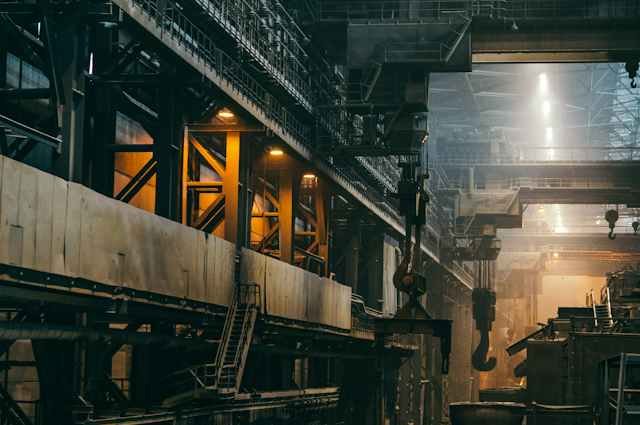
- High-strength low-alloy steels: tiny niobium additions refine grain structure and increase strength in pipelines, bridges, vehicles and buildings.
- Superconducting magnets: Nb-Ti and Nb₃Sn are central to MRI scanners, NMR instruments, fusion devices and particle accelerators.
- Superalloys: niobium improves high-temperature strength in jet-engine and rocket materials.
- Optical glass: niobium oxides raise refractive index and can allow thinner corrective lenses.
- Electronics: niobium and its oxides are used in capacitors, resonators and specialised devices.
Niobium isotopes
Natural niobium consists essentially of one stable isotope, ⁹³Nb. Many radioactive isotopes are known and are used primarily in nuclear-physics research and tracer studies.
For wider isotope information, see the CleverlySmart isotope table.
Biological role and safety
Niobium has no known biological role. Bulk niobium is relatively inert, but powders can present fire hazards and individual niobium compounds require normal chemical safety assessment.
Discovery and naming
British chemist Charles Hatchett discovered the element in 1801 in the mineral columbite and called it columbium. Because niobium and tantalum are chemically very similar, their identities were confused for decades. The name niobium, from Niobe in Greek mythology, became the internationally accepted name.
Frequently asked questions
Why is niobium added to steel?
Very small additions can strengthen steel by refining grains and forming stable carbides or nitrides, improving strength without excessive weight.
Why is niobium important for MRI?
Niobium-based superconductors can create powerful, stable magnetic fields with low electrical loss when cooled below their critical temperature.
Niobium in superconductors and high-strength steel
Niobium is important in superconducting technology. Niobium–titanium (Nb-Ti) and niobium-tin (Nb₃Sn) alloys can carry very large electrical currents with essentially no resistance at low temperature. They are used in MRI magnets, particle accelerators and research magnets.
Small additions of niobium also strengthen low-alloy steels by refining grain size and forming stable carbides and nitrides. This allows pipelines, bridges and vehicle structures to achieve high strength without large increases in weight.
Corrosion resistance and supply
Niobium forms a stable oxide film and is resistant to many corrosive environments. Most commercial niobium comes from pyrochlore ores, with production concentrated in a small number of countries, making supply-chain diversity strategically important.
Frequently asked questions
Why is niobium used in MRI machines?
Superconducting niobium alloys can generate powerful, stable magnetic fields with very low electrical loss when cooled sufficiently.
Is niobium rare?
It is not among the rarest elements in the crust, but economically valuable deposits are uncommon and geographically concentrated.