Zirconium is the chemical element with symbol Zr and atomic number 40. It is a hard, silvery transition metal with excellent corrosion resistance. Zirconium is particularly important in nuclear technology because purified zirconium absorbs very few neutrons.
Zirconium quick facts
| Property | Value |
| Symbol | Zr |
| Atomic number | 40 |
| Relative atomic mass | 91.224 |
| Group | 4 |
| Period | 5 |
| Block | d-block |
| Density | 6.52 g/cm³ |
| Melting point | 1854°C |
| Boiling point | 4406°C |
| Electron configuration | [Kr] 4d² 5s² |
| Common oxidation state | +4 |
| CAS number | 7440-67-7 |
| Key natural isotopes | ⁹⁰Zr, ⁹²Zr, ⁹⁴Zr |
Position and chemistry
Zirconium is in group 4, period 5 and the d-block. Its electron configuration is [Kr] 4d² 5s². The +4 oxidation state dominates zirconium compounds.
See the complete CleverlySmart periodic table.
Corrosion resistance and nuclear properties
Zirconium rapidly forms a thin oxide layer that gives it outstanding resistance to acids, alkalis and seawater. Highly purified zirconium also has a very low neutron-capture cross section, making zirconium alloys ideal for cladding nuclear fuel in water-cooled reactors.
Natural zirconium is usually contaminated with hafnium, a chemically similar element that absorbs neutrons much more strongly. Nuclear-grade zirconium therefore requires careful zirconium-hafnium separation.
Important zirconium compounds
- Zirconium dioxide (ZrO₂, zirconia): a tough, heat-resistant ceramic used in dental restorations, oxygen sensors, refractory materials, knives and advanced engineering ceramics.
- Zirconium tetrachloride (ZrCl₄): an intermediate in zirconium-metal production.
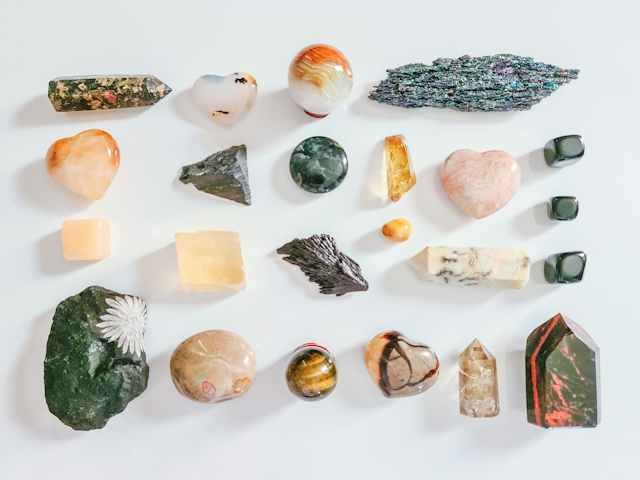
- Zircon (ZrSiO₄): an important mineral and gemstone and a major source of zirconium.
Occurrence and production
Zirconium is obtained mainly from the mineral zircon, commonly found in heavy-mineral sands. Zirconium compounds are converted into purified intermediates before the metal is reduced. For nuclear applications, hafnium must be removed to very low levels.
Uses of zirconium
- Nuclear reactors: zirconium alloys are widely used as fuel cladding and structural tubing.
- Chemical equipment: corrosion-resistant zirconium is used in heat exchangers, vessels and piping.
- Advanced ceramics: zirconia is strong, wear-resistant and thermally stable.
- Dental materials: zirconia is used for crowns, bridges and implant components.
- Gemstones: zircon is natural ZrSiO₄, while cubic zirconia is synthetic ZrO₂ and is often used as a diamond simulant.
Zirconium isotopes
Natural zirconium contains several isotopes, primarily ⁹⁰Zr, ⁹¹Zr, ⁹²Zr, ⁹⁴Zr and very long-lived ⁹⁶Zr. Zirconium isotopes are important in nuclear science and geochemical studies.
For broader isotope data, see the CleverlySmart isotope table.
Biological role and safety
Zirconium has no known essential biological role. Bulk zirconium and zirconia are relatively inert in many applications, but fine zirconium powder can ignite and presents a serious fire hazard. Specific compounds require their own safety controls.
Discovery and name
German chemist Martin Heinrich Klaproth identified zirconium as a new element in 1789 while analysing zircon. Jöns Jacob Berzelius later produced an impure form of the metal. The name derives from zircon, itself linked to older Persian mineral terminology.
Frequently asked questions
Why is zirconium used in nuclear reactors?
Purified zirconium combines good corrosion resistance and mechanical performance with very low neutron absorption.
Is zircon the same as cubic zirconia?
No. Zircon is the natural mineral ZrSiO₄. Cubic zirconia is synthetic crystalline ZrO₂.
Zirconium in nuclear engineering
Zirconium alloys are important in water-cooled nuclear reactors because they combine good corrosion resistance with a very low neutron-absorption cross section. Fuel rods are commonly enclosed in zirconium-alloy cladding so neutrons can continue sustaining fission with relatively little absorption by the structural material.
Nuclear-grade zirconium must contain very little hafnium, because hafnium absorbs neutrons strongly. Separating these chemically similar elements is therefore a crucial refining step.
Zircon, zirconia and advanced ceramics
Zirconium occurs naturally in minerals such as zircon (ZrSiO₄). Zirconia (ZrO₂) is a high-temperature ceramic used in thermal barriers, oxygen sensors, dental restorations and tough engineering ceramics. Stabilised zirconia can transform under stress in a way that helps resist crack growth.
Frequently asked questions
Is zirconium the same as zircon?
No. Zirconium is the chemical element Zr; zircon is a zirconium silicate mineral.
Why is hafnium removed from nuclear zirconium?
Hafnium captures neutrons efficiently, while zirconium captures relatively few, so hafnium contamination would reduce reactor neutron economy.