ohmmeter is a measuring instrument that measures the electrical resistance of an electrical component or circuit. The unit of measurement is the ohm, denoted Ω....
The special relativity theory explains how space and time are connected for objects that move at consistent speeds in straight lines. One of the most famous aspects is that objects move at the speed...
General Relativity General relativity, based on the principle of general covariance which extends the principle of relativity to non-inertial reference frames, is a relativistic theory of gravitation, that is to say, it describes the...
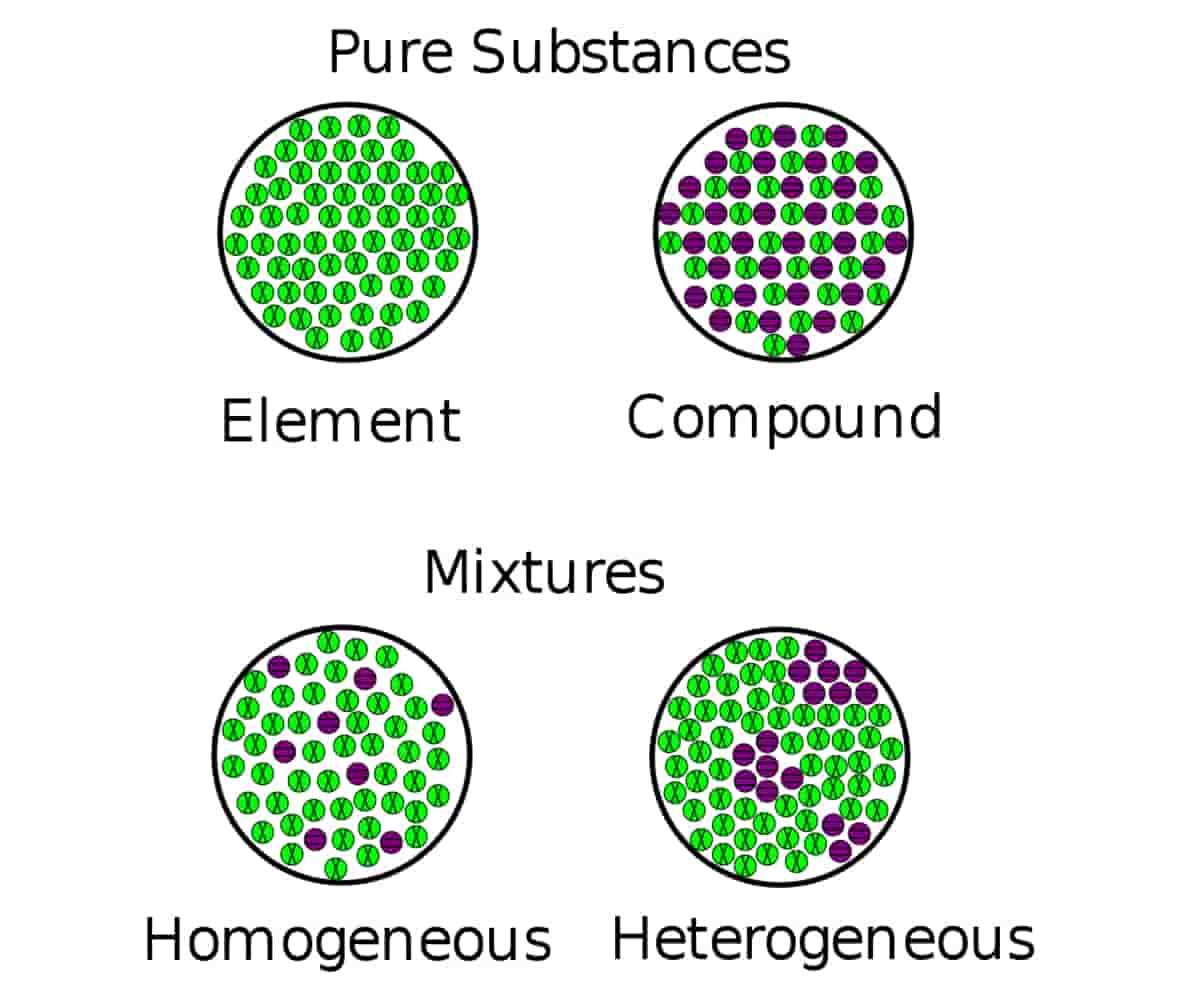
Homogeneous and Heterogeneous | Difference, Mixtures, Example The terms heterogeneous and homogeneous refer to mixtures of materials in chemistry. The difference between heterogeneous and homogeneous mixtures lies in the degree of mixing of the...
Photon is with γ (gamma) symbol in physics. It transmits the electromagnetic interaction, light being an example of an electromagnetic wave. Photon speed 299 792 458 meters per second or about 186,282 miles per...
Maria Sklodowska (Marie Curie) was born in Poland on November 7, 1867. As a child, Maria was a very good student. But she could not go to university, which was forbidden to girls at...
Mass and Weight on an Object Mass and weight seem interchangeable, but they are completely different. So what is mass? What is the weight? What are the differences, and why is it important to...
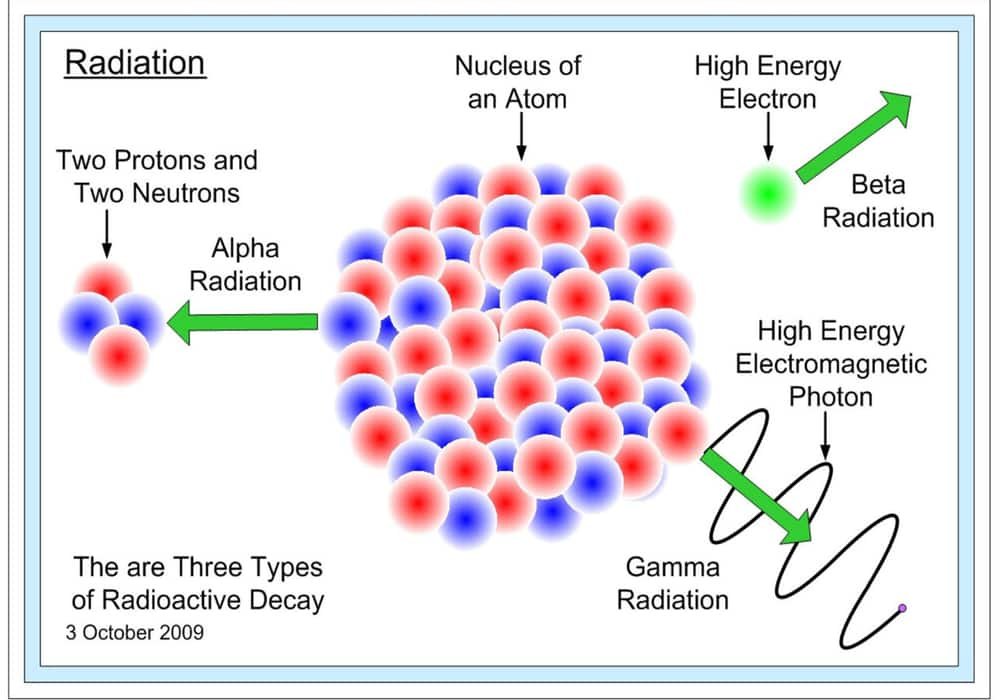
Radiation Types Radiation is energy that is emitted from a source and propagates through space in the form of waves or particles. There are different radiation types, each with its own characteristics or properties....
Gamma Radiation (Gamma γ Rays) Often denoted by the Greek letter gamma, ). Gamma rays are an energized form of electromagnetic radiation produced by radioactivity/other nuclear/subatomic processes such as electron-positron annihilation. What are gamma...
Alpha Radiation (α Rays) Alpha rays (or alpha particles or alpha radiation) are a form of radiation emitted by highly ionized and poorly penetrating particles. They consist of two protons and two neutrons combined...
Beta Radiation (Beta Rays) β Beta radiation is a form of radioactivity in which the nucleus emits electrons and antineutrinos (beta minus radiation) or positrons and neutrinos (beta plus radiation). This process gives rise...
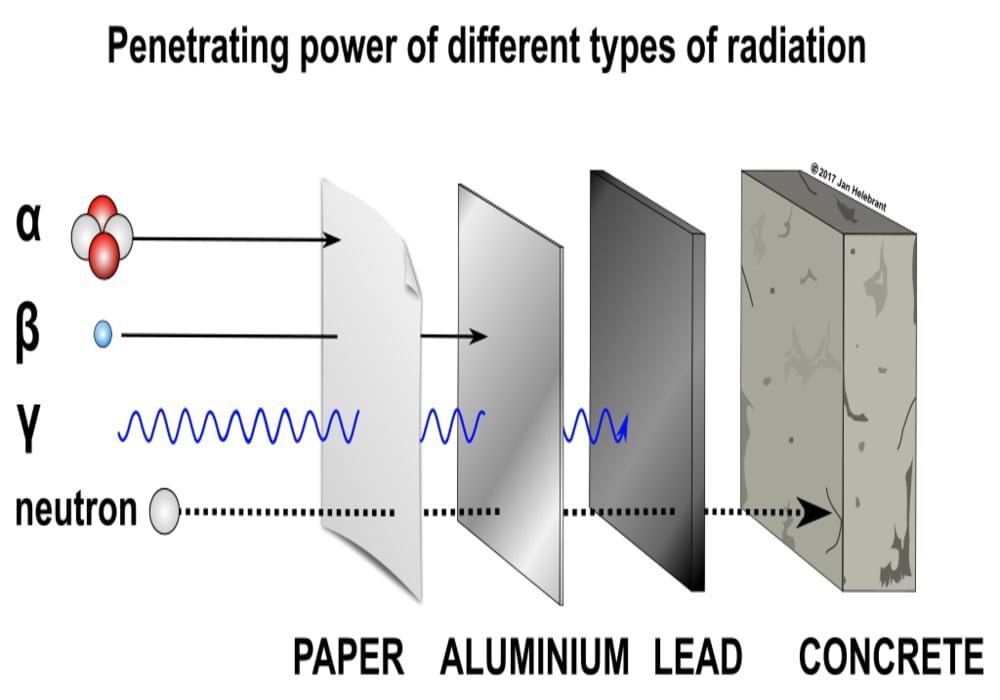
Ionizing Radiation This article discusses the radiation of light rays alpha (α), beta (β), gamma (γ), radiation and neutrons. Certain types of ionizing radiations have sufficient energy to rip electrons out of their orbits...
How to increase the strength of a magnet? The ideal would be to completely cover the magnet with a layer of very dense wire and well applied to the metal of the magnet whose...
SI Units Standards and Units (abbreviated as SI Units): Laws of physics are expressed in terms of physical quantities such as time, force, temperature, density and numerous other parameters. Physical quantities are often divided...
CleverlySmart › Physics › E=MC2 E=MC2 (E=mc²): Einstein’s Mass–Energy Equivalence Explained E=MC2 (often written E=mc²) is the famous result from Albert Einstein’s special relativity showing that mass and energy are two forms of the...
Galileo | Italian Physicist and Astronomer Galileo is a 17th century Italian scientist: physicist, astronomer, engineer, mathematician… Considered the father of modern science, he bases his conclusions on experimentation and not on argument. He...