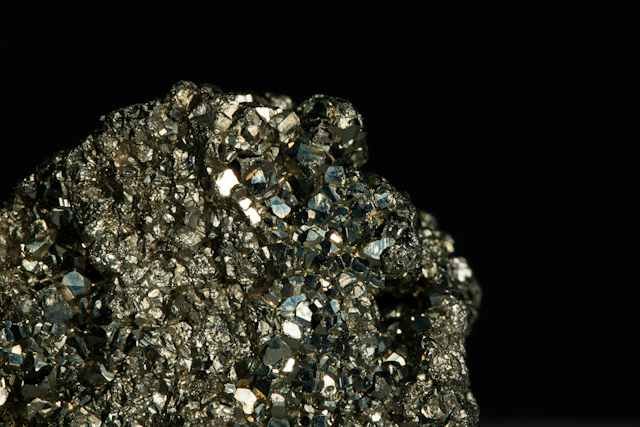
Cadmium is the chemical element with symbol Cd and atomic number 48. It is a soft, bluish-silver metal in group 12. Cadmium has useful electrochemical and neutron-absorbing properties, but its toxicity and tendency to accumulate in living organisms have led to strict controls on many uses.
Cadmium quick facts
| Property | Value |
| Symbol | Cd |
| Atomic number | 48 |
| Relative atomic mass | 112.414 |
| Group | 12 |
| Period | 5 |
| Block | d-block |
| Density | 8.69 g/cm³ |
| Melting point | 321.069°C |
| Boiling point | 767°C |
| Electron configuration | [Kr] 4d¹⁰ 5s² |
| Common oxidation state | +2 |
| CAS number | 7440-43-9 |
| Key natural isotope | ¹¹⁴Cd |
Position and chemistry
Cadmium is in group 12, period 5 and the d-block. Its electron configuration is [Kr] 4d¹⁰ 5s². The +2 oxidation state dominates cadmium chemistry.
See the complete CleverlySmart periodic table.
Physical properties
Cadmium is soft, ductile and relatively low-melting. It resembles zinc chemically and is often found with zinc ores. Cadmium metal can form protective coatings, but heating or welding cadmium-containing materials can generate highly hazardous cadmium fumes.
Important cadmium compounds
- Cadmium sulfide (CdS): a yellow semiconductor and pigment historically used for vivid yellow colours.
- Cadmium selenide (CdSe): a semiconductor used in specialised optoelectronic materials and quantum dots.
- Cadmium oxide (CdO): a conductive oxide used in specialised electronic materials.
- Cadmium salts: used in electroplating and research but subject to strict toxicity controls.
Occurrence and production
Cadmium rarely forms major standalone ores. It is recovered mainly as a by-product of zinc mining and refining, particularly from zinc sulfide ores. Separation occurs during roasting, leaching, purification and electrorefining processes.
Uses of cadmium
- Nickel-cadmium batteries: historically one of the largest uses; many applications have shifted to less toxic battery chemistries.
- Protective coatings: cadmium plating provides excellent corrosion resistance for critical aerospace and marine components.
- Nuclear reactors: cadmium absorbs neutrons strongly and can be used in control or shielding applications.
- Pigments: cadmium sulfide and related compounds produce intense yellow, orange and red colours, though use is restricted in many products.
- Semiconductors: CdTe and CdSe are important in photovoltaics, detectors and optoelectronic research.
Cadmium isotopes
Natural cadmium contains several stable and extremely long-lived isotopes, including ¹⁰⁶Cd, ¹⁰⁸Cd, ¹¹⁰Cd, ¹¹¹Cd, ¹¹²Cd, ¹¹³Cd, ¹¹⁴Cd and ¹¹⁶Cd. Cadmium-113 has a particularly large neutron-capture cross section, contributing to cadmium’s usefulness in nuclear technology.
For broader isotope data, see the CleverlySmart isotope table.
Health and environmental hazards
Cadmium is toxic and carcinogenic. It can damage the kidneys, bones, lungs and other organs and can accumulate in the body. Occupational exposure to cadmium fumes or dust requires strict controls, and disposal of cadmium batteries and contaminated materials must follow hazardous-waste rules.
Environmental cadmium can enter food chains through contaminated soil, water and industrial emissions. Tobacco smoke is also an important cadmium exposure source for smokers.
Discovery and name
German chemist Friedrich Stromeyer discovered cadmium in 1817 while investigating impurities in zinc compounds. The name comes from cadmia, an older term for zinc-containing minerals.
Frequently asked questions
Why is cadmium dangerous?
Cadmium is a cumulative toxic metal. Long-term exposure can damage organs and increase cancer risk.
Why is cadmium used in nuclear reactors?
Some cadmium isotopes absorb neutrons very efficiently, allowing cadmium-containing components to help control neutron flux.
Deeper look at cadmium: structure, compounds and environmental importance
Cadmium is a soft, silvery-white metal with a density of about 8.65 g/cm³, a melting point near 321 °C and a boiling point near 767 °C. At ordinary conditions it adopts a hexagonal close-packed (hcp) crystal structure. These physical properties help explain why cadmium is easy to work at relatively low temperatures, but its toxicity sharply limits many older applications.
Important cadmium compounds
- Cadmium sulfide (CdS): a yellow semiconductor historically used as a pigment and still important in some electronic and photovoltaic contexts.
- Cadmium telluride (CdTe): a semiconductor used in thin-film solar cells because it absorbs sunlight efficiently.
- Cadmium oxide (CdO): used in specialist electronic materials and as an intermediate in cadmium chemistry.
- Cadmium chloride (CdCl₂): a soluble cadmium salt used mainly in controlled laboratory and industrial processes.
Why cadmium still matters in technology
Cadmium use has declined in many consumer products, yet it remains technologically important. Nickel-cadmium batteries are valued in some aviation, emergency and industrial systems for durability and performance over a wide temperature range. Cadmium compounds are also used in selected semiconductors, photovoltaics, neutron-absorbing materials and specialised coatings.
In nuclear technology, certain cadmium isotopes have very high neutron-capture cross sections. This is why cadmium has historically been used in neutron-control and shielding applications. Modern systems may use alternative materials depending on the design and regulatory requirements.
Environmental exposure and health
Cadmium is a major environmental health concern because it can accumulate in soils, plants and living organisms. Long-term exposure can damage the kidneys and bones, and inhalation of cadmium-containing fumes or dust is especially hazardous. Important exposure pathways include certain industrial processes, tobacco smoke and contaminated food or dust.
Because cadmium persists in the environment, recycling, emission controls and safe disposal of cadmium-containing products are important. Regulations in many countries restrict cadmium in electronics, pigments, plastics and consumer goods.
Frequently asked questions
Why is cadmium toxic?
Cadmium can bind to proteins and disrupt normal cellular processes. The body eliminates it slowly, so repeated exposure can lead to accumulation, especially in the kidneys.
Is cadmium still used in batteries?
Yes. Nickel-cadmium batteries are still used in some specialist applications, although many consumer uses have shifted to other battery chemistries because of environmental and health concerns.
What makes cadmium telluride useful for solar cells?
CdTe has a direct band gap and absorbs sunlight strongly, allowing efficient thin semiconductor layers to convert light into electricity.