Tellurium is the chemical element with symbol Te and atomic number 52. It is a rare, brittle metalloid in group 16. Tellurium is technologically important in solar cells, thermoelectric materials, alloys, phase-change electronics and specialised semiconductors.
Tellurium quick facts
| Property | Value |
| Symbol | Te |
| Atomic number | 52 |
| Relative atomic mass | 127.60 |
| Group | 16 |
| Period | 5 |
| Block | p-block |
| Classification | Metalloid |
| Density | 6.232 g/cm³ |
| Melting point | 449.51°C |
| Boiling point | 988°C |
| Electron configuration | [Kr] 4d¹⁰ 5s² 5p⁴ |
| Common oxidation states | −2, +4, +6 |
| CAS number | 13494-80-9 |
| Key natural isotope | ¹³⁰Te |
Position and chemistry
Tellurium is in group 16, period 5 and the p-block. Its electron configuration is [Kr] 4d¹⁰ 5s² 5p⁴. It is chemically related to selenium and sulfur but is more metallic in character.
See the complete CleverlySmart periodic table.
Physical and semiconductor properties
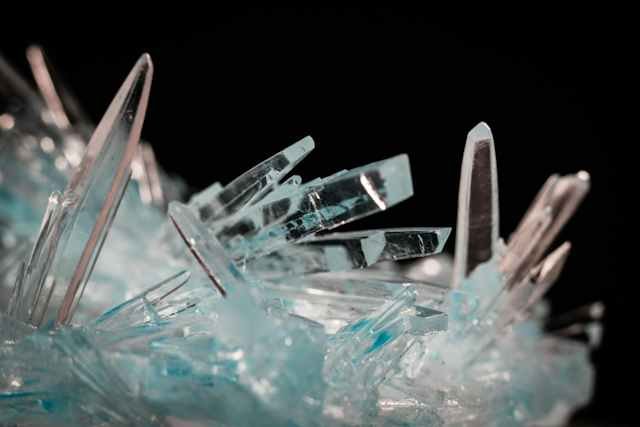
Crystalline tellurium is a brittle, silvery-grey solid, while commercial material may appear as a grey powder. Tellurium is a semiconductor and its electrical conductivity can be increased by light and by carefully controlled impurities.
Important tellurium compounds
- Cadmium telluride (CdTe): a direct-band-gap semiconductor widely used in thin-film solar cells and radiation detectors.
- Bismuth telluride (Bi₂Te₃): one of the most important thermoelectric materials for solid-state cooling and power generation near room temperature.
- Tellurium dioxide (TeO₂): used in optical glass, acousto-optic devices and specialised ceramics.
- Phase-change tellurides: germanium-antimony-tellurium materials can reversibly change structure and are used in some memory technologies.
Occurrence and production
Tellurium is extremely scarce in Earth’s crust. It occurs in minerals including calaverite and sylvanite and is commonly associated with copper and precious-metal ores. Most commercial tellurium is recovered from anode slimes generated during copper electrorefining.
Uses of tellurium
- Solar energy: CdTe is a major thin-film photovoltaic material.
- Thermoelectrics: bismuth telluride converts temperature differences directly into electrical voltage and can also provide solid-state cooling.
- Alloys: tellurium improves machinability in copper and steel and can strengthen lead.
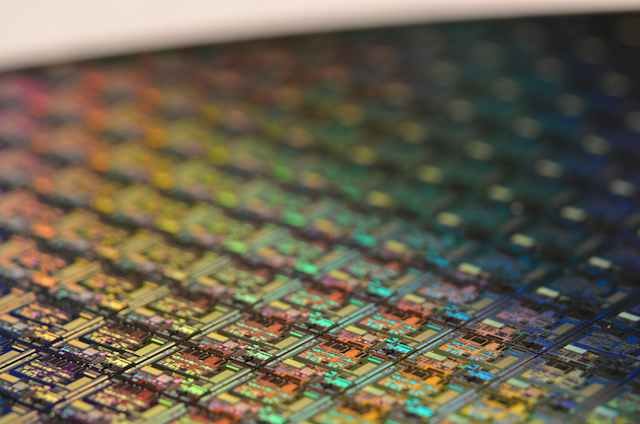
- Electronics: tellurides are used in semiconductors, phase-change memory and infrared technologies.
- Glass and ceramics: tellurium compounds can modify colour, optical properties and refractive behaviour.
Tellurium isotopes
Natural tellurium contains multiple isotopes, including ¹²⁰Te, ¹²²Te, ¹²³Te, ¹²⁴Te, ¹²⁵Te, ¹²⁶Te, ¹²⁸Te and ¹³⁰Te. Tellurium-128 and tellurium-130 are extraordinarily long-lived double-beta emitters. Tellurium isotope studies are important in nuclear physics and geochemistry.
For wider isotope information, see the CleverlySmart isotope table.
Biological role and safety
Tellurium has no known essential biological role. Tellurium and many compounds can be toxic. Even relatively low exposures can cause a persistent garlic-like odour on the breath because the body can metabolise tellurium into volatile compounds.
Discovery and name
Tellurium was identified in the late 18th century from Transylvanian gold ores. Martin Heinrich Klaproth confirmed it as a new element and named it after tellus, Latin for Earth.
Frequently asked questions
Why is tellurium important for solar panels?
Cadmium telluride absorbs sunlight efficiently and can be deposited as thin semiconductor layers, making it a commercially important photovoltaic material.
Is tellurium rare?
Yes. It is one of the rarer elements in Earth’s crust and is usually recovered as a by-product rather than mined directly.
Deeper look at tellurium: structure and physical properties
Tellurium is a brittle, silvery metalloid with a density of about 6.24 g/cm³, a melting point near 449.5 °C and a boiling point near 988 °C. Crystalline tellurium has a trigonal structure built from helical atomic chains. This unusual bonding contributes to its semiconductor and thermoelectric behaviour.
Tellurium in solar cells and thermoelectrics
One of tellurium’s most important modern uses is in cadmium telluride (CdTe) thin-film solar cells. CdTe absorbs sunlight strongly, allowing photovoltaic layers to be much thinner than crystalline silicon wafers.
Tellurium is also central to thermoelectric materials. Bismuth telluride (Bi₂Te₃) and related compounds can convert temperature differences directly into electrical voltage and can also provide solid-state cooling when current is applied.
Other important compounds and uses
- Tellurium dioxide (TeO₂): used in specialised optical glass, acousto-optic devices and research materials.
- Metal alloys: small additions of tellurium can improve machinability in copper and steel while retaining useful electrical or mechanical properties.
- Phase-change materials: tellurium-containing chalcogenides are important in some data-storage and memory technologies.
Occurrence, rarity and supply
Tellurium is scarce in Earth’s crust and is rarely mined as a primary product. Much of the world’s supply is recovered as a by-product of copper refining, particularly from anode slimes. This by-product dependence makes tellurium supply sensitive to changes in copper production and recycling.
Isotopes and nuclear science
Natural tellurium contains several isotopes. Two of the most abundant, ¹²⁸Te and ¹³⁰Te, undergo extremely slow double-beta decay and have half-lives vastly longer than the age of the universe. These isotopes are therefore important in fundamental nuclear-physics experiments.
Health and handling
Tellurium and its compounds should be handled with appropriate controls. Significant exposure to some tellurium compounds can produce a characteristic garlic-like odour on the breath and may cause other adverse effects. Industrial handling therefore relies on ventilation, hygiene and exposure limits.
Frequently asked questions
Why is tellurium important for renewable energy?
Tellurium is used in CdTe solar cells and in thermoelectric compounds that can convert waste heat into electricity, making it important in several energy technologies.
Is tellurium rarer than gold?
Tellurium is extremely scarce in Earth’s crust and is generally considered comparable to, or rarer than, gold in crustal abundance, although economic availability depends strongly on by-product recovery.