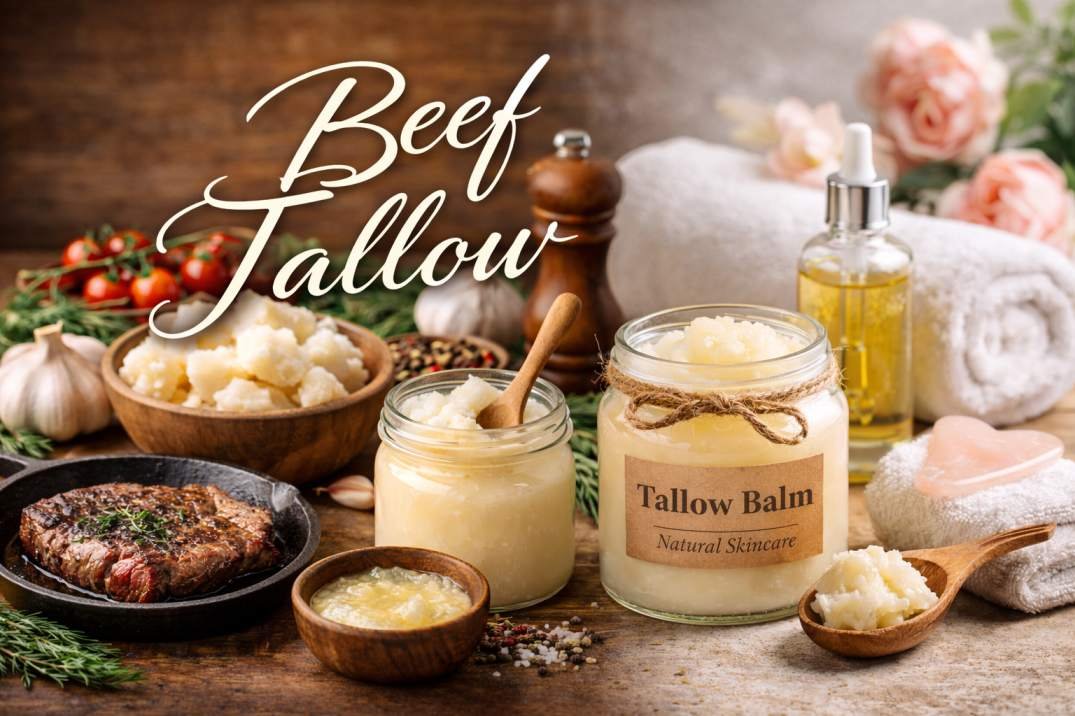
Beef Tallow: The Ancestral Superfat Making a Powerful Comeback
Once a pantry staple, beef tallow is back in modern kitchens and minimalist skincare routines.
Here’s what it is, how it’s used, how to buy quality tallow, and what reputable sources say.
Quick Navigation
Open ID version
What Is Beef Tallow?
Beef tallow is rendered fat from cattle—most often made from suet
(the firmer fat around the kidneys and loins). Rendering simply means gently heating fat so it melts,
then straining out solids until you’re left with a clean, stable cooking fat.
Why it became popular again
- High-heat friendly: valued for frying and searing.
- Simple ingredient: minimal processing when properly rendered.
- Versatile: cooking, soap-making, and balm bases.
Cholesterol (excess) – symptoms, causes, treatments, levels, foods, warning, dietary supplements
What it looks & smells like
- Color: cream-white to pale yellow
- Texture: solid at room temperature, melts when warmed
- Aroma: mild when filtered well (strong odors often suggest impurities)
Nutrition: What’s in Beef Tallow?
Beef tallow is essentially pure fat. A commonly cited composition is roughly
~50% saturated fat, ~42% monounsaturated fat, and a
small amount of polyunsaturated fat. Key fatty acids often noted include
palmitic, stearic, and oleic acid. (See references.)
| Component | Why it matters (practical) |
|---|---|
| Saturated fats (often ~50%) | More heat-stable compared with many oils higher in polyunsaturated fats (context matters). |
| Monounsaturated fats (often ~40%+) | Often used for balance between stability and mouthfeel. |
| Low polyunsaturated fats (small %) | Lower tendency to oxidize during high-heat cooking vs oils very high in PUFAs (not universal). |
no more than 10% of total energy (and trans fat to ≤1%). If you increase tallow,
consider overall dietary pattern and personal health goals. (See references.)
Cooking with Beef Tallow
Tallow is beloved for crisp edges and savory depth—especially with potatoes.
Many cooking guides cite a smoke point around 400–420°F (204–216°C),
making it popular for frying and searing. (See references.)
Best uses
- French fries & roasted potatoes
- Searing steaks and burgers
- Sautéing vegetables
- Cast-iron seasoning (thin layer, wipe excess)
Foods Rich in Potassium (Kalium) | What Foods With Potassium in Them? Good For Heart And Bones
Simple storage tips
- Keep in an airtight glass jar
- Store cool & dark for best freshness
- Use clean utensils to avoid contamination
Beef Tallow for Skin: Why People Use It
Tallow-based balms are popular in “minimal ingredient” skincare. A recent peer-reviewed dermatology
discussion notes that tallow and human sebum share high proportions of palmitic and oleic acid,
which is one reason proponents claim it integrates into the skin’s lipid matrix. (See references.)
If you are acne-prone, start cautiously (some richer occlusives can be comedogenic for certain people).
How it’s commonly used
- As a night balm for very dry areas (hands, elbows)
- As a barrier layer in cold/windy weather
- Mixed with essential oils (optional, watch for irritation)
Buyer’s Guide: How to Choose High-Quality Beef Tallow
Quick buyer checklist
- ☑ “Rendered from suet” or “kidney fat” stated (often preferred)
- ☑ Mild scent, no rancid notes
- ☑ Clear labeling (source, ingredients, intended use: cooking vs cosmetic)
- ☑ Good reviews specifically mentioning smell & performance
FAQ
Is beef tallow the same as suet?
Not exactly. Suet is the raw, firm fat (often from around kidneys/loins).
Tallow is the rendered, purified fat made by gently heating suet (or other beef fat).
Is beef tallow “healthy”?
It depends on your overall diet, portion size, and health profile.
Authoritative guidance (e.g., WHO) recommends keeping saturated fat to ≤10% of energy intake.
If you use tallow, aim for balance across your whole diet rather than judging a single fat in isolation.
What’s the best way to cook fries in tallow?
Keep the temperature consistent, avoid overheating, and filter tallow after use to reduce flavor carryover.
Scientific & Authoritative References
- WHO (2023). “WHO updates guidelines on fats and carbohydrates” — saturated fat ≤10% energy; trans fat ≤1%.
Source - NCBI Bookshelf (WHO guideline support). “Recommendations and supporting information” — saturated fat to 10% energy (strong recommendation).
Source - Almatroud L, et al. (2025). “Beef Tallow-Based Skincare Claims in Social Media” (PMC) — notes similarity in palmitic & oleic acid proportions between tallow and human sebum in discussion.
Source - Wikipedia (summary table; verify with primary sources when possible). “Tallow” — example fatty-acid composition (sat/mono/poly) and major fatty acids listed.
Source - Montana State University Extension (public education). “Sizzling Science of Tallow” — commonly cited smoke point range (400–420°F) and culinary uses.
Source
WHO/NIH/academic citations first. Wikipedia is fine for quick context but should not be the only evidence source.