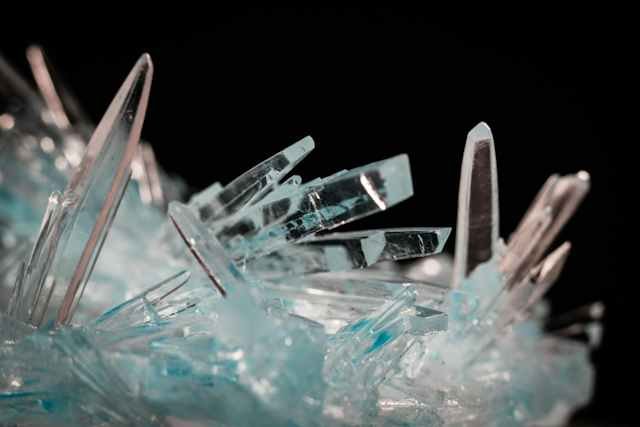
Iodine is the chemical element with symbol I and atomic number 53. It is a halogen in group 17 and forms dark, lustrous crystals that readily produce a violet vapour when heated. Iodine is also an essential trace nutrient because the thyroid gland requires iodide to make thyroid hormones.
Iodine quick facts
| Property | Value |
| Symbol | I |
| Atomic number | 53 |
| Relative atomic mass | 126.904 |
| Group | 17 |
| Period | 5 |
| Block | p-block |
| State at 20°C | Solid |
| Density | 4.933 g/cm³ |
| Melting point | 113.7°C |
| Boiling point | 184.4°C |
| Electron configuration | [Kr] 4d¹⁰ 5s² 5p⁵ |
| Common oxidation state | −1 |
| CAS number | 7553-56-2 |
| Stable natural isotope | ¹²⁷I |
Position and chemistry
Iodine is in group 17, period 5 and the p-block. Its electron configuration is [Kr] 4d¹⁰ 5s² 5p⁵. Like other halogens, iodine readily gains an electron to form iodide, I⁻, but it can also form compounds in positive oxidation states.
See the complete CleverlySmart periodic table.
Physical and chemical properties
Elemental iodine consists of I₂ molecules. At room temperature it is a black-grey crystalline solid with a metallic sheen. Its vapour is violet, a colour that gave iodine its name. Iodine is less reactive than chlorine and bromine but still forms compounds with many metals and nonmetals.
Important iodine compounds
- Potassium iodide (KI): used in iodised salt, pharmaceuticals and emergency thyroid blocking after certain radioactive iodine releases.
- Sodium iodide (NaI): used in medicine, chemistry and scintillation radiation detectors.
- Iodates: stable iodine compounds used to fortify salt in some countries.
- Iodinated organic compounds: widely used as X-ray and CT contrast media and in pharmaceutical synthesis.
Occurrence and production
Iodine is dispersed in seawater, brines, soils and marine organisms rather than concentrated in large elemental deposits. Commercial iodine is recovered mainly from iodine-rich underground brines and from caliche deposits containing iodate minerals.
Uses of iodine
- Nutrition: iodised salt helps prevent iodine-deficiency disorders.
- Medicine: iodine compounds are used in antiseptics, thyroid treatment, diagnostic imaging and radiopharmaceuticals.
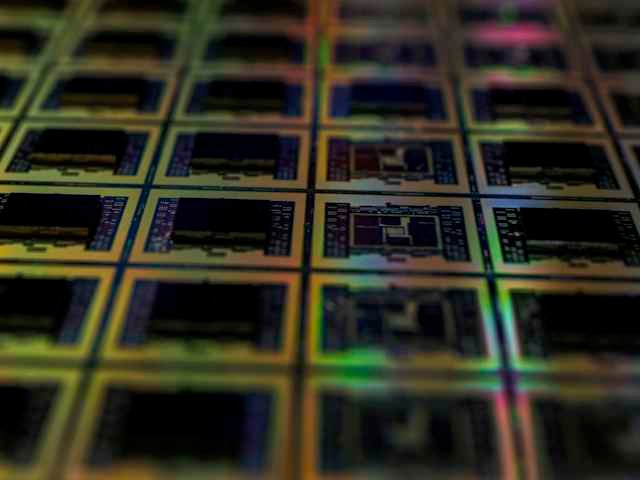
- LCD technology: iodine-containing polarising films are used in liquid-crystal displays.
- Chemical synthesis: iodides and organoiodine reagents are useful in organic chemistry and pharmaceutical manufacture.
- Photography: silver iodide was historically important in photosensitive materials.
Biological role of iodine
Iodine is an essential nutrient. The thyroid incorporates iodine into the hormones thyroxine (T4) and triiodothyronine (T3), which help regulate metabolism, growth and development. Severe deficiency can cause goitre and developmental problems, while excessive iodine intake can also disrupt thyroid function.
Iodine isotopes
Natural iodine consists essentially of stable ¹²⁷I. Radioisotopes are extremely important in medicine and nuclear science. Iodine-131 is used to diagnose and treat some thyroid disorders and cancers, while iodine-123 is used mainly for diagnostic imaging.
Long-lived iodine-129 is a significant environmental tracer and nuclear-fission product. For broader isotope data, see the CleverlySmart isotope table.
Safety
Elemental iodine can irritate the skin, eyes and respiratory tract. Concentrated iodine solutions require careful handling. Radioactive iodine presents a special hazard because the thyroid actively concentrates iodide, so nuclear medicine and emergency planning use specific radiation-protection protocols.
Discovery and name
French chemist Bernard Courtois discovered iodine in 1811 while processing seaweed ash. The name comes from the Greek ioeides, meaning violet-coloured, referring to its vapour.
Frequently asked questions
Why does the body need iodine?
Iodine is required to make thyroid hormones that regulate metabolism and are crucial to normal growth and brain development.
Is iodine purple?
Solid iodine is dark grey-black, but iodine vapour is characteristically violet.
Deeper look at iodine: physical form and molecular structure
Iodine is a lustrous, dark grey-purple solid made of I₂ molecules. It has a density of about 4.93 g/cm³, melts near 113.7 °C and boils near 184.3 °C. Solid iodine has an orthorhombic molecular crystal structure. When warmed, it readily produces the familiar violet iodine vapour.
Why iodine is biologically essential
Iodine is an essential trace element because the thyroid gland uses iodide to make the hormones thyroxine (T4) and triiodothyronine (T3). These hormones help regulate metabolism, growth and development. Insufficient iodine intake can cause thyroid enlargement and other health problems, which is why many countries use iodised salt as a public-health measure.
Medicine, imaging and antiseptics
Iodine chemistry is widely used in medicine. Iodine-containing contrast agents improve visibility in X-ray and CT imaging, while iodine-based antiseptics such as povidone-iodine are used to reduce microorganisms on skin. These applications use carefully formulated iodine compounds rather than elemental iodine alone.
Radioisotopes of iodine
Several iodine radioisotopes are medically important. Iodine-123 is used in diagnostic nuclear medicine, while iodine-131 is used in selected thyroid treatments and can also be an important fission product in nuclear-safety monitoring. Their behaviour in the body reflects the thyroid’s natural tendency to concentrate iodine.
Industrial chemistry and analytical uses
Iodine compounds are used in catalysts, pharmaceuticals, specialty chemicals and analytical chemistry. The iodine-starch reaction, which produces an intense blue colour, is a classic qualitative test and is widely used in chemistry education and titrations involving iodine.
Safety and nutrition
Iodine is essential in small dietary amounts but excessive intake can also disturb thyroid function. Elemental iodine is irritating and should be handled with appropriate ventilation and protective equipment. Medical iodine products and radioactive iodine should only be used under professional guidance.
Frequently asked questions
Why is iodine added to salt?
Iodised salt provides a small, reliable dietary source of iodine and helps prevent iodine-deficiency disorders at the population level.
Why is iodine vapour purple?
I₂ molecules absorb part of the visible spectrum through electronic transitions, leaving transmitted and scattered light with a characteristic violet-purple appearance.