Phosphorus is the chemical element with symbol P and atomic number 15. It is a reactive nonmetal in group 15 of the periodic table. Phosphorus is unusual because it exists in several allotropes with very different properties, especially white, red, violet and black phosphorus.
Phosphorus is also biologically essential. Phosphate groups are fundamental components of DNA, RNA, ATP, cell membranes and bones. In nature, phosphorus is not normally found as the free element because it reacts readily and occurs mainly in phosphate minerals.
Phosphorus quick facts
| Property | Value |
| Symbol | P |
| Atomic number | 15 |
| Relative atomic mass | 30.974 |
| Group | 15 |
| Period | 3 |
| Block | p-block |
| Classification | Nonmetal |
| State at 20°C | Solid |
| Density | 1.823 g/cm³ (white phosphorus) |
| Melting point | 44.15°C (white phosphorus) |
| Boiling point | 280.5°C (white phosphorus) |
| Electron configuration | [Ne] 3s² 3p³ |
| CAS number | 7723-14-0 |
| Stable natural isotope | ³¹P |
Where is phosphorus on the periodic table?
Phosphorus is in group 15, period 3 and the p-block. Its electron configuration is [Ne] 3s² 3p³, which gives it five valence electrons. Common oxidation states include −3, +3 and +5.
See the complete CleverlySmart periodic table. Phosphorus is below nitrogen in group 15.
Allotropes of phosphorus
White phosphorus
White phosphorus consists mainly of tetrahedral P₄ molecules. It is waxy, highly reactive, poisonous and can ignite spontaneously in air. For safety, it is commonly stored under water. Its low melting and boiling points compared with other forms reflect its molecular structure.
Red phosphorus
Red phosphorus is more stable and much less reactive than white phosphorus. It has a polymeric structure and is used in applications such as safety matches, flame-retardant systems and chemical production.
Black phosphorus
Black phosphorus has a layered structure somewhat analogous to graphite and is the most thermodynamically stable allotrope under ordinary conditions. Its semiconducting behavior has attracted interest in advanced materials research.
Chemical properties and compounds
Phosphorus readily forms compounds with oxygen, halogens, metals and hydrogen. Important compounds include phosphoric acid (H₃PO₄), phosphate salts, phosphorus oxides and phosphorus chlorides.
- Phosphates: important in fertilizers, biological chemistry, detergents, food processing and industrial materials.
- Phosphoric acid: used in fertilizer manufacture, food and beverage processing, rust treatment and many chemical processes.
- Phosphorus pentoxide / tetraphosphorus decoxide: a powerful dehydrating material and chemical intermediate.
- Phosphorus chlorides: valuable reagents for introducing chlorine or phosphorus groups in chemical synthesis.
Where phosphorus comes from
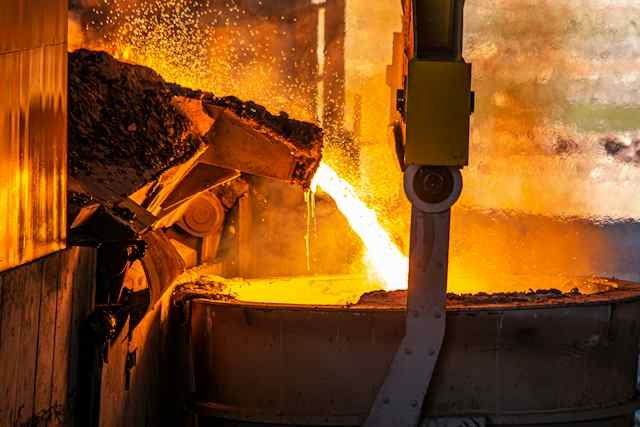
Commercial phosphorus ultimately comes from phosphate rock, especially minerals related to apatite. Most mined phosphate is processed for fertilizers rather than converted to elemental phosphorus. Elemental phosphorus can be produced by reducing phosphate minerals with carbon in the presence of silica at high temperature in an electric furnace.
Uses of phosphorus
- Fertilizers: phosphate fertilizers are the largest phosphorus-related use and provide an essential plant nutrient.
- Safety matches: red phosphorus is used on striking surfaces.
- Metallurgy: phosphorus compounds and phosphide-related materials have specialized roles in metal processing and alloys.
- Food and industrial chemistry: phosphoric acid and phosphates are used as acidity regulators, buffers, cleaning agents and process chemicals.
- Electronics and research: phosphorus is used as an n-type dopant in silicon, while black phosphorus is studied as a two-dimensional semiconductor material.
Biological role of phosphorus
Phosphorus is an essential element for life. Phosphate groups form part of the backbone of DNA and RNA. ATP and related molecules transfer chemical energy inside cells. Phospholipids are major components of cell membranes, and calcium phosphate minerals give bones and teeth much of their rigidity.
Biological phosphorus is present mainly as phosphate, not as elemental white or red phosphorus. The chemistry and safety of these forms are very different.
Phosphorus isotopes
Natural phosphorus consists essentially of one stable isotope, phosphorus-31 (³¹P). Its nuclear properties make ³¹P nuclear magnetic resonance an important analytical technique in chemistry and biology.
Radioisotopes including ³²P and ³³P are used as tracers in research and in certain scientific and medical applications under controlled conditions. See the complete isotope table and guide to nuclides for broader isotope context.
Safety
White phosphorus is extremely hazardous. It is toxic, can ignite in air and can cause severe thermal and chemical burns. Red phosphorus is considerably more stable but can still burn and should be handled according to chemical safety procedures. Phosphate salts used as nutrients or industrial chemicals have very different hazard profiles from elemental phosphorus.
History and origin of the name
Phosphorus was isolated in 1669 by German alchemist Hennig Brand while he was experimenting with concentrated urine in a search for the philosopher’s stone. The material glowed in the dark, and its name comes from Greek words meaning light-bearer.
Frequently asked questions
What is the atomic number of phosphorus?
15.
What is phosphorus used for most?
Phosphate compounds are used most extensively in fertilizer production.
Is phosphorus dangerous?
The answer depends on the form. White phosphorus is highly dangerous, while phosphate ions are normal and essential components of living organisms.
Allotropes and chemical behaviour
Phosphorus exists in several allotropes with very different properties. White phosphorus consists of P₄ molecules, is highly reactive and can ignite spontaneously in air. Red phosphorus is polymeric, more stable and much less reactive. Black phosphorus has a layered structure and is the thermodynamically most stable form under ordinary conditions.
Phosphorus in biology, agriculture and the environment
Phosphate groups are essential to DNA, RNA, ATP, cell membranes and bones. Agriculture therefore depends heavily on phosphate fertilisers. However, excessive phosphate runoff can accelerate eutrophication in lakes and rivers, encouraging algal blooms and oxygen depletion.
Most commercial phosphorus originates from phosphate rock. A major industrial product is phosphoric acid, used in fertilisers, food processing and chemical manufacturing. Because high-grade phosphate deposits are finite and geographically concentrated, phosphorus recovery from wastewater and agricultural residues is an active area of resource research.
Frequently asked questions
Why is white phosphorus dangerous?
It is extremely reactive, can ignite on contact with air and is highly toxic. It requires specialised handling and storage.
Is phosphorus renewable?
The element itself is conserved, but economically mineable phosphate rock is limited. Recycling phosphorus from manure, sewage and food waste can reduce dependence on mined reserves.