Holmium is the chemical element with symbol Ho and atomic number 67. It is a silvery lanthanide metal noted for having one of the strongest magnetic moments of any naturally occurring element.
Holmium quick facts
| Symbol | Ho |
| Atomic number | 67 |
| Standard atomic weight | 164.930 |
| Period / block | 6 / f-block |
| Family | Lanthanide |
| Electron configuration | [Xe] 4f11 6s2 |
| Common oxidation state | +3 |
| Natural isotope | 165Ho (stable) |
Properties and chemistry
Holmium is relatively soft and malleable. It slowly oxidises in air and reacts with acids. Its compounds are dominated by Ho3+ ions and often have yellow, orange or pink colours depending on chemical environment and concentration.
Occurrence and production
Holmium occurs only in compounds and is recovered from rare-earth minerals such as monazite and xenotime. Industrial separation from neighbouring lanthanides uses solvent extraction or ion-exchange methods.
Uses
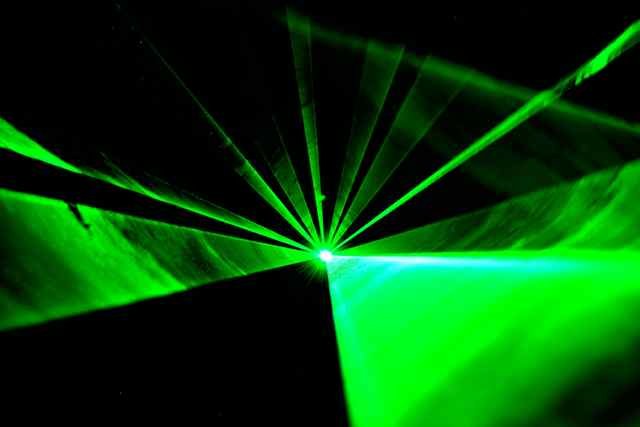
- Lasers: holmium-doped solid-state lasers emit strongly in the infrared and are used in medicine and materials processing.
- Magnetic materials: holmium is used in research magnets and as an additive where very high magnetic moments are useful.
- Calibration: holmium oxide glass provides sharp absorption lines and is used as a wavelength calibration standard in spectroscopy.
- Nuclear research: holmium’s neutron-absorption properties are studied for specialist applications.
Isotopes
Natural holmium consists essentially of one stable isotope, 165Ho. Radioisotopes including 166Ho are produced artificially and have research and medical applications because of their radiation properties.
History and name
Holmium was identified in the late nineteenth century. Its name comes from Holmia, the Latin name for Stockholm.
Safety
Holmium has no known essential biological role. Bulk metal presents relatively low chemical hazard, but fine metal powder is reactive and rare-earth dusts or soluble compounds should be handled with normal laboratory controls.
See the CleverlySmart periodic table and isotope guide.