Xenon is the chemical element with symbol Xe and atomic number 54. It is a colourless, odourless, dense noble gas in group 18. Xenon is rare in Earth’s atmosphere but has unusual chemistry for a noble gas and important applications in lighting, spacecraft propulsion, medicine and semiconductor manufacturing.
Xenon quick facts
| Property | Value |
| Symbol | Xe |
| Atomic number | 54 |
| Relative atomic mass | 131.293 |
| Group | 18 |
| Period | 5 |
| Block | p-block |
| State at 20°C | Gas |
| Density | 0.005366 g/cm³ |
| Melting point | −111.75°C |
| Boiling point | −108.099°C |
| Electron configuration | [Kr] 4d¹⁰ 5s² 5p⁶ |
| Common oxidation states | +2, +4, +6, +8 |
| CAS number | 7440-63-3 |
| Key natural isotope | ¹³²Xe |
Position and electron configuration
Xenon is in group 18, period 5 and the p-block. Its electron configuration is [Kr] 4d¹⁰ 5s² 5p⁶, giving it a filled valence shell. Xenon is far less reactive than ordinary nonmetals, but it forms more stable compounds than the lighter noble gases.
See the complete CleverlySmart periodic table.
Physical and chemical properties
Xenon is a monatomic gas and is much denser than air. When excited by an electrical discharge it emits a bright bluish-white light. Xenon’s large, easily polarised electron cloud makes it more chemically reactive than helium, neon, argon or krypton.
Important xenon compounds
- Xenon difluoride (XeF₂): a solid fluorinating agent used for selective silicon etching in microfabrication.
- Xenon tetrafluoride (XeF₄): a stable xenon fluoride with a square-planar molecular structure.
- Xenon hexafluoride (XeF₆): a powerful fluorinating compound and precursor to xenon oxides and oxyfluorides.
- Xenon oxides and oxyfluorides: unusual noble-gas compounds that demonstrate that a filled electron shell does not mean absolute chemical inertness.
Occurrence and production
Xenon occurs in Earth’s atmosphere at less than one part per million by volume. Commercial xenon is recovered from the heavy noble-gas fraction produced during cryogenic air separation, making it expensive relative to common industrial gases.
Uses of xenon
- High-intensity lighting: xenon arc lamps provide bright, daylight-like illumination for projection, searchlights and specialised optical equipment.
- Camera flash lamps: electrical discharge through xenon produces an intense short pulse of white light.
- Ion propulsion: xenon is widely used as propellant in satellite and spacecraft ion thrusters because it is heavy, inert and easy to ionise.
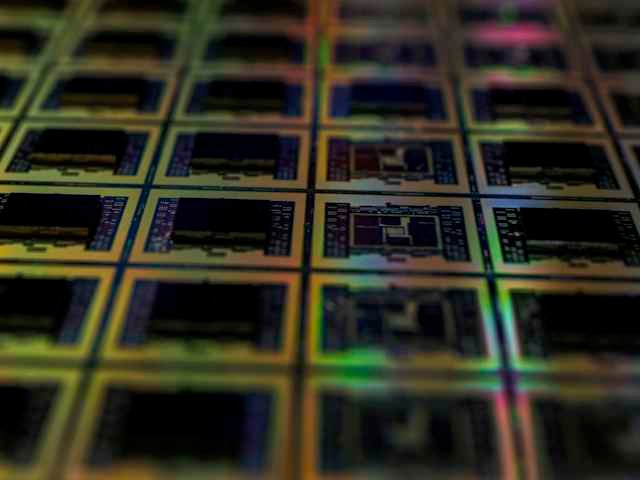
- Semiconductor fabrication: XeF₂ selectively etches silicon and is used in microelectromechanical-system manufacturing.
- Medicine: xenon is used as an imaging contrast gas in specialised MRI research and has anaesthetic properties, though cost limits widespread anaesthesia use.
Xenon isotopes
Natural xenon contains many stable or extremely long-lived isotopes, including ¹²⁴Xe, ¹²⁶Xe, ¹²⁸Xe, ¹²⁹Xe, ¹³⁰Xe, ¹³¹Xe, ¹³²Xe, ¹³⁴Xe and ¹³⁶Xe. Xenon isotopes are especially important in nuclear physics, planetary science and medical imaging.
Hyperpolarised ¹²⁹Xe is used in specialised lung MRI. ¹³⁶Xe is studied in experiments searching for neutrinoless double-beta decay. For broader isotope data, see the CleverlySmart isotope table.
Biological role and safety
Xenon has no known essential biological role. The gas is not chemically toxic at ordinary concentrations, but it can displace oxygen in enclosed spaces. At high partial pressures it has anaesthetic effects. Xenon fluorides and oxides are much more hazardous because they are strong oxidants and fluorinating agents.
Discovery and name
William Ramsay and Morris Travers discovered xenon in 1898 while separating the heaviest components of liquid air. The name comes from the Greek xenos, meaning stranger or foreigner.
Frequently asked questions
Can xenon form chemical compounds?
Yes. Xenon forms stable fluorides such as XeF₂, XeF₄ and XeF₆, along with several oxygen-containing compounds.
Why is xenon used in ion thrusters?
It is heavy, chemically inert, easily ionised and can be stored densely, making it efficient for electric spacecraft propulsion.
Deeper look at xenon: physical properties and noble-gas chemistry
Xenon is a colourless, odourless noble gas that is much denser than air. It condenses at about −108.1 °C and freezes near −111.8 °C. Like the other noble gases, xenon is monatomic under ordinary conditions, but its large electron cloud makes it more chemically reactive than lighter noble gases such as helium, neon and argon.
Xenon compounds changed the idea of noble-gas inertness
The discovery that xenon can form stable compounds was a landmark in chemistry. Important examples include xenon difluoride (XeF₂), xenon tetrafluoride (XeF₄) and xenon hexafluoride (XeF₆). These compounds show that a filled valence shell does not make an atom absolutely incapable of chemical bonding.
Xenon fluorides are powerful fluorinating agents and are mainly used in specialised laboratory and industrial chemistry. Some xenon-oxygen compounds are also known, but several are unstable and require careful handling.
Spacecraft ion propulsion
Xenon is widely used as a propellant in ion thrusters. Its atoms are heavy, easy to ionise and chemically inert, making xenon well suited to electric propulsion systems that produce small but highly efficient thrust over long periods. This technology is valuable for satellite station-keeping and deep-space missions.
Medicine and medical imaging
Xenon has anaesthetic properties and has been studied and used as an inhaled anaesthetic in specialised settings. Hyperpolarised ¹²⁹Xe is also used in advanced magnetic-resonance research and clinical imaging of the lungs because its nuclear spin can produce a detectable MRI signal after inhalation.
Lighting, detectors and radiation science
Xenon flash lamps and arc lamps can produce intense white light and ultraviolet radiation. Xenon is also used in radiation detectors and particle-physics instrumentation. In nuclear reactors, ¹³⁵Xe is especially important because it absorbs neutrons very strongly and can temporarily affect reactor reactivity after power changes.
Xenon isotopes
Natural xenon contains several stable or extremely long-lived isotopes. This diverse isotope mix supports applications ranging from geochemistry and cosmochemistry to nuclear medicine and reactor physics.
Frequently asked questions
Is xenon completely inert?
No. Xenon is far less reactive than most elements, but it can form compounds, especially with highly electronegative elements such as fluorine and oxygen.
Why is xenon expensive?
Xenon is present only in trace amounts in the atmosphere and must be separated during large-scale air processing, so production is limited and energy-intensive.