Arsenic is the chemical element with symbol As and atomic number 33. It is a brittle metalloid in group 15. Arsenic is widely known for the toxicity of many of its compounds, but it also has important controlled uses in semiconductor technology, metallurgy and specialised materials.
Arsenic quick facts
| Property | Value |
| Symbol | As |
| Atomic number | 33 |
| Relative atomic mass | 74.922 |
| Group | 15 |
| Period | 4 |
| Block | p-block |
| Classification | Metalloid |
| Density | 5.75 g/cm³ (grey arsenic) |
| Phase change at 1 atm | Sublimes at about 616°C |
| Electron configuration | [Ar] 3d¹⁰ 4s² 4p³ |
| Common oxidation states | −3, +3, +5 |
| CAS number | 7440-38-2 |
| Stable natural isotope | ⁷⁵As |
Position and electron configuration
Arsenic is in group 15, period 4 and the p-block. Its electron configuration is [Ar] 3d¹⁰ 4s² 4p³. Important oxidation states are −3, +3 and +5.
See the complete CleverlySmart periodic table.
Allotropes and physical properties
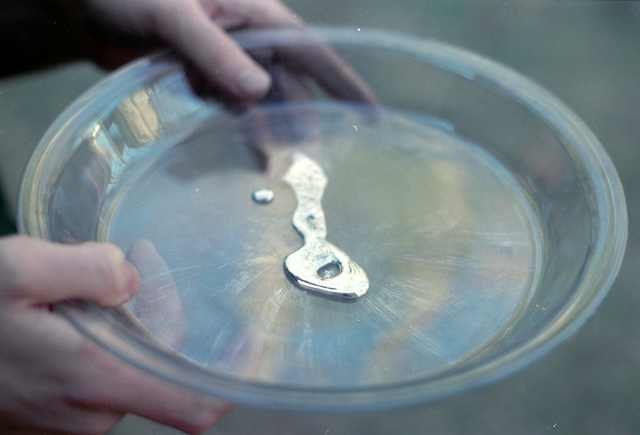
The most stable form is grey arsenic, a brittle, metallic-looking solid. Yellow and black allotropes are also known. At ordinary atmospheric pressure arsenic characteristically sublimes rather than passing through a normal liquid phase, changing directly from solid to vapour near 616°C.
Important arsenic compounds
- Arsenic trioxide (As₂O₃): historically notorious as a poison but also used under tightly controlled conditions in certain medical and industrial applications.
- Arsenates and arsenites: oxygen-containing arsenic species important in environmental chemistry and toxicology.
- Arsine (AsH₃): an extremely toxic gas used in some semiconductor manufacturing processes.
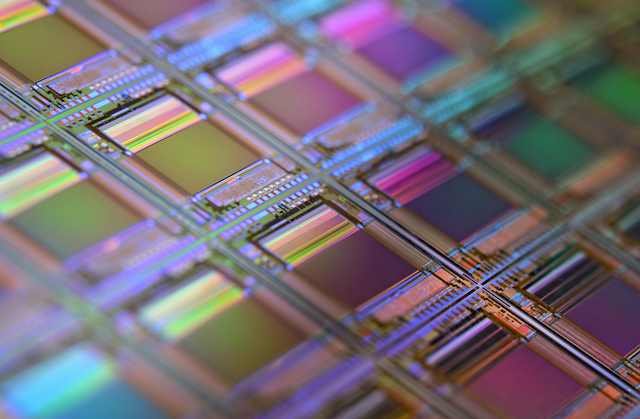
- Gallium arsenide (GaAs): a high-performance semiconductor used in radio-frequency electronics, LEDs, lasers and solar cells.
Occurrence and production
Arsenic occurs naturally in minerals such as arsenopyrite, realgar and orpiment and is often associated with copper, lead, gold and other metal ores. Commercial arsenic is commonly recovered as a by-product during the smelting and refining of other metals.
Uses of arsenic
- Semiconductors: GaAs is important in high-frequency communications, optoelectronics and high-efficiency photovoltaic devices.
- Doping: arsenic can be used as an n-type dopant in silicon electronics.
- Specialty alloys: small arsenic additions can modify properties of certain lead or copper alloys.
- Glass and materials: arsenic compounds have had specialised uses in glassmaking, although many applications have declined because of toxicity concerns.
Arsenic isotopes
Natural arsenic consists essentially of a single stable isotope, ⁷⁵As. Several radioactive arsenic isotopes are used in research and have specialised medical or tracer applications.
For broader isotope information, see the CleverlySmart isotope table.
Toxicity and environmental safety
Many inorganic arsenic compounds are highly toxic. Chronic exposure to inorganic arsenic is associated with serious health effects, including increased cancer risk. Drinking-water contamination by naturally occurring arsenic is a major public-health issue in some regions.
Arsenic toxicity depends strongly on chemical form. Some organic arsenic compounds found naturally in seafood are much less toxic than inorganic arsenite and arsenate species. Occupational and environmental assessments must therefore distinguish arsenic species rather than relying only on total arsenic concentration.
History
Arsenic minerals and compounds were known in antiquity. Isolation of elemental arsenic is commonly associated with medieval European alchemy and is often attributed to Albertus Magnus in the 13th century, although the historical record is less precise than for many modern element discoveries.
Frequently asked questions
Does arsenic melt?
At ordinary atmospheric pressure grey arsenic normally sublimes near 616°C rather than exhibiting an ordinary melting point. Under elevated pressure a liquid phase can exist.
Is all arsenic equally poisonous?
No. Toxicity varies greatly with chemical species, oxidation state, dose and route of exposure. Inorganic arsenic species are generally the principal health concern.
Arsenic chemistry, semiconductors and toxicity
Arsenic occurs in several allotropes and oxidation states, especially −3, +3 and +5. Its compounds behave very differently depending on chemical form. In environmental toxicology, inorganic arsenic compounds are generally of greatest concern because chronic exposure can damage multiple organs and increase cancer risk.
Arsenic also has important technological uses. Gallium arsenide (GaAs) is a III–V semiconductor used in radio-frequency electronics, lasers, LEDs and high-efficiency solar cells. Small amounts of arsenic are also used as dopants in silicon.
Groundwater and environmental exposure
In some geological settings, natural minerals release arsenic into groundwater. This is a major public-health issue in parts of South and Southeast Asia and elsewhere. Safe water management depends on testing, treatment and alternative water sources rather than colour, taste or smell because arsenic contamination may not be obvious.
Frequently asked questions
Is arsenic always poisonous?
Toxicity depends on dose and chemical form, but inorganic arsenic compounds can be highly toxic and chronic exposure is a serious health hazard.
Why is arsenic used in electronics?
Compounds such as gallium arsenide have electronic and optical properties that can outperform silicon in specialised high-frequency and optoelectronic devices.