Thulium is the chemical element with symbol Tm and atomic number 69. It is a soft, silvery lanthanide and one of the least abundant naturally occurring rare-earth elements.
Thulium quick facts
| Symbol | Tm |
| Atomic number | 69 |
| Standard atomic weight | 168.934 |
| Family | Lanthanide |
| Electron configuration | [Xe] 4f13 6s2 |
| Main oxidation state | +3 |
| Natural isotope | 169Tm (stable) |
Properties and chemistry
Thulium is workable and can be cut with a knife. It slowly tarnishes in air but is more resistant to oxidation than several earlier lanthanides. Its chemistry is dominated by Tm3+ compounds, which can show greenish coloration.
Occurrence and production
Thulium occurs in small concentrations in rare-earth minerals. Commercial material is obtained as a by-product of processing larger rare-earth deposits, followed by demanding separation from chemically similar neighbours.
Uses
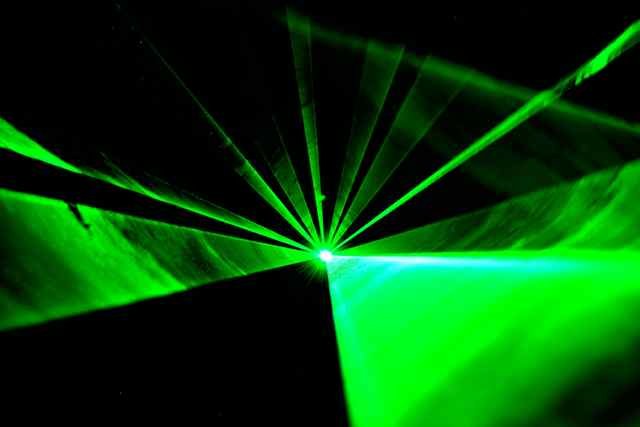
- Lasers: thulium-doped crystals and fibers produce infrared laser light for medical and industrial applications.
- Portable X-ray sources: neutron-activated 170Tm can serve as a compact radiation source.
- Research: thulium compounds are studied in optical, magnetic and solid-state systems.
Isotopes
Natural thulium is monoisotopic and consists essentially of stable 169Tm. Several artificial radioisotopes are known; 170Tm is notable for its use as a radiation source.
History and name
Thulium was discovered in 1879 by Swedish chemist Per Teodor Cleve. Its name comes from Thule, an ancient name associated with the far north.
Safety
Thulium has no known essential biological role. Stable thulium compounds are handled as specialty laboratory chemicals; radioactive isotopes require dedicated radiological controls.
See the CleverlySmart periodic table of all 118 elements and the complete isotope table and guide to nuclides.