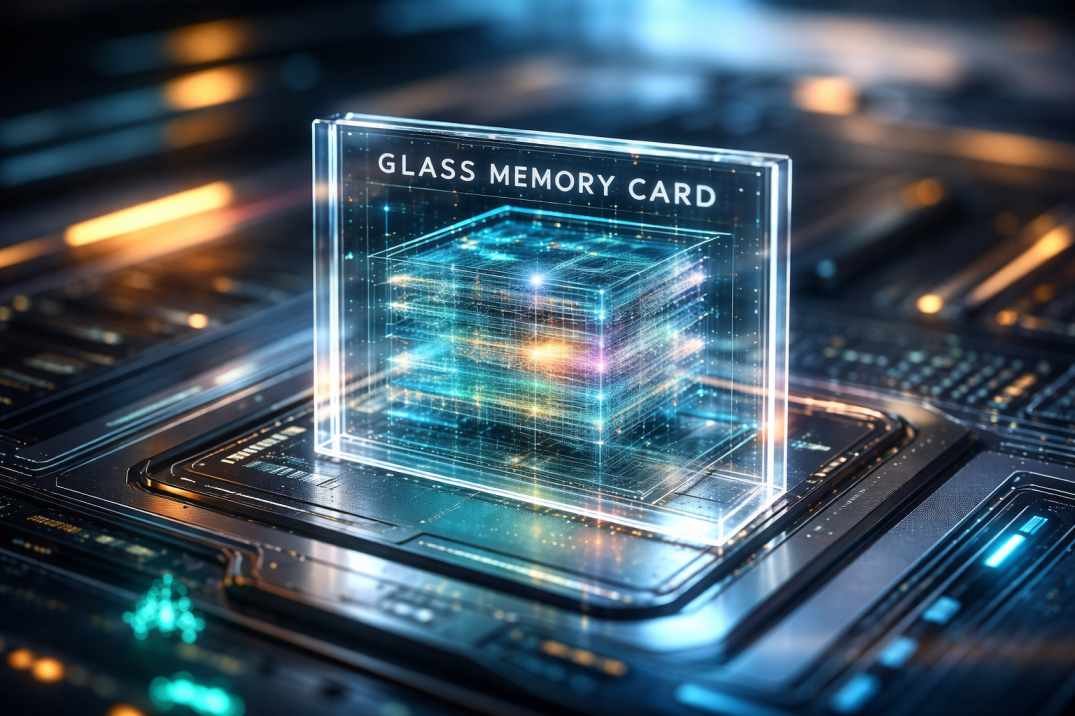
Glass Memory Card: Is It Real, Strong, and Better Than a Regular Memory Card?
The phrase glass memory card sounds futuristic, almost like science fiction.
But the idea behind it is real. Researchers and major technology companies have already shown that digital data can be stored in glass for extremely long periods.
This raises important questions. Is a glass memory card really true? Is Microsoft’s example real? Is glass storage strong and durable?
And how is it different from the regular memory cards we use in cameras, phones, and other devices?
In this article, you will learn what a glass memory card means, see real examples, understand how strong it is, compare it with regular memory cards,
and discover when this technology could actually be useful.
What Is a Glass Memory Card?
A glass memory card is not yet a mainstream consumer product like an SD card or microSD card.
Instead, the term is best understood as a simple way to describe glass-based data storage.
Unlike regular memory cards that use flash memory, glass-based storage uses laser technology to write data into glass material.
The purpose is not daily convenience. The main goal is long-term data preservation.
That means if you hear the phrase “glass memory card,” think of it as a future-looking storage concept designed to keep information safe for decades, centuries, or even longer,
rather than a removable card you buy today for your phone or camera.
Is a Glass Memory Card Real?
Yes, the technology behind the idea is real. However, it is important to be precise.
Today, there is real glass data storage technology, but there is not yet a normal consumer “glass memory card” sold in the same way as SD cards or microSD cards.
So the short answer is:
- Yes, data can be stored in glass.
- Yes, major companies and researchers have demonstrated it.
- No, it is not yet a common memory card product for everyday electronics.
Is Microsoft’s Glass Storage Example True?
Yes. One of the most famous real examples is Microsoft Project Silica.
Microsoft has developed technology that stores archival data inside glass using lasers.
This project is aimed at long-term cloud archival storage, not at replacing your current phone memory card.
In simple terms, Microsoft’s work proves that storing data in glass is not a myth.
But it is still very different from the regular removable memory cards used in consumer devices.
Other researchers, including teams at universities, have also demonstrated advanced glass storage systems.
That makes the concept credible and technically serious.
Is a Glass Memory Card Strong and Robust?
This is where the topic becomes especially interesting. Many people hear the word “glass” and immediately think “fragile.”
But storage-grade glass can be surprisingly durable for archival purposes.
Why glass storage can be strong
- High heat resistance: glass can tolerate temperatures that would damage many ordinary storage devices.
- Long-term stability: data stored in glass is designed to survive for very long periods.
- Resistance to environmental effects: glass storage is less vulnerable to humidity, corrosion, and magnetic interference.
- Archival durability: it is intended for preserving important data, not for frequent casual rewriting.
But there is an important limit
“Robust” does not mean indestructible. A glass-based storage medium can be highly durable in terms of time, temperature, and archival preservation,
while still requiring careful physical handling.
So yes, glass storage can be very strong in the context it is designed for.
But it is strong in a different way from a regular plastic-encased memory card built for everyday portable use.
Glass Memory Card vs Regular Memory Card
The biggest difference is purpose. A regular memory card is made for everyday digital life.
A glass memory card concept is made for long-term preservation.
| Feature | Regular Memory Card | Glass Memory Card |
|---|---|---|
| Technology | Flash memory | Laser-written glass storage |
| Main use | Daily storage and file transfer | Long-term archival preservation |
| Rewritable | Yes | Usually intended for archival writing |
| Common devices | Phones, cameras, drones, tablets | Specialized storage systems |
| Consumer availability | Widely available | Not yet common consumer hardware |
| Long-term preservation | Limited compared with archival media | Designed for extreme longevity |
| Best for | Photos, videos, app storage, everyday use | Archives, historical records, critical backups |
This comparison shows that a glass memory card is not simply a stronger SD card.
It is a different storage idea built for a different mission.
How Does Glass Storage Work?
Although the exact method can vary, the basic principle is straightforward.
- Digital data is prepared for storage.
- Ultra-fast lasers write microscopic structures into the glass.
- The stored patterns represent the information.
- Special imaging and software systems read the data back.
This is completely different from regular memory cards, which store information electronically in flash memory cells.
How Can We Use It and When?
Glass-based storage is most useful when the goal is to preserve important data for a very long time.
Best use cases
- National archives and public records
- Scientific research data
- Cultural heritage preservation
- Cold cloud storage
- Critical long-term backup systems
When not to use it
A glass memory card is not the right choice for recording 4K video on a camera, expanding a smartphone’s storage,
or moving files between devices every day.
For those tasks, regular memory cards and SSDs are still much more practical.
Will Glass Memory Cards Replace Normal Memory Cards?
Probably not for everyday users in the near future.
Regular memory cards are cheap, portable, fast, rewritable, and supported by a huge device ecosystem.
Glass storage solves a different problem: keeping data safe for a very long time.
So instead of replacing standard memory cards, glass storage is more likely to become a powerful archival layer alongside existing storage technologies.
FAQ About Glass Memory Cards
Is a glass memory card available to buy?
Not as a normal consumer product. Glass-based storage exists mainly in research and specialized archival development.
Is Microsoft’s glass storage real?
Yes. Microsoft Project Silica is a real glass-based archival storage project.
Is a glass memory card stronger than a normal memory card?
It can be stronger for long-term preservation and environmental resistance, but not necessarily better for everyday portable use.
Can glass storage replace SD cards?
Not for normal daily use. It is designed for archival storage, not typical consumer electronics workflows.
What is the main advantage of glass data storage?
Its biggest advantage is the ability to preserve data for very long periods with high durability.
Read also: Data Analysis | Definition, Explanations and Examples
Conclusion
The idea of a glass memory card is real enough to matter, but it should be understood correctly.
The technology exists, and examples such as Microsoft’s glass storage project prove that data can be preserved in glass.
Still, this is not the same as the removable memory cards we use every day.
Regular memory cards are best for convenience and speed. Glass storage is best for long-term protection and preservation.
That difference is exactly what makes this technology exciting. It may not replace your SD card tomorrow,
but it could play a major role in preserving the world’s most valuable digital information far into the future.
Read the Indonesian version here:
Glass Memory Card versi Bahasa Indonesia.