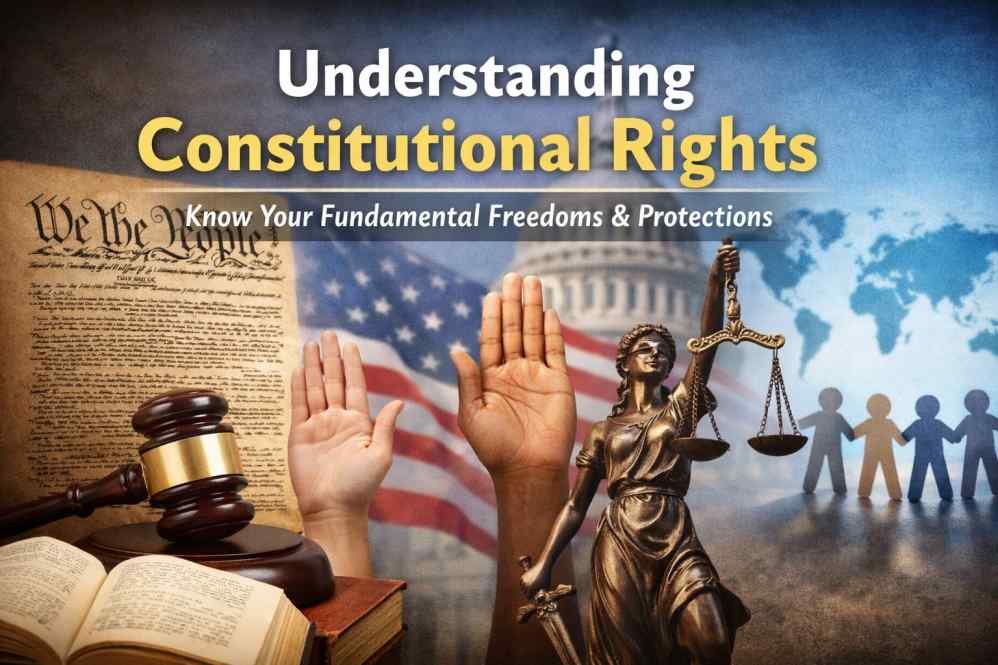
Constitutional Rights of a Person: Meaning, Examples, and Protection
The constitutional rights of a person are the basic rights protected by a country’s constitution. Many people hear this phrase when talking about freedom of speech, privacy, equality before the law, voting rights, or protection from abuse of power. But many still do not fully understand what it really means in daily life.
The problem is simple: if people do not understand their constitutional rights, they are more likely to be treated unfairly, silenced, watched without reason, discriminated against, or denied legal protection. In the digital age, this matters even more because personal data, online speech, and private communication are now part of everyday life.
That is why this article explains constitutional rights in simple, human language. After reading it, the reader should clearly understand what constitutional rights are, why they matter, what their limits are, and how they can be protected in real life and online.
Versi Bahasa Indonesia: Hak Konstitusional Seseorang: Pengertian, Contoh, dan Perlindungannya
Table of Contents
- What are constitutional rights?
- Why are constitutional rights important?
- Examples of constitutional rights
- Main features of constitutional rights
- Can constitutional rights be limited?
- Examples of violations
- How to protect constitutional rights
- Constitutional rights in the digital age
- FAQ
What are constitutional rights?
Constitutional rights are rights that are recognized, guaranteed, and protected by the constitution of a country. These rights are not just political ideas. They are legal protections.
In simple words, constitutional rights tell the government: there are things you must respect, protect, and not violate.
In short: the constitutional rights of a person are basic legal rights that protect human dignity, freedom, privacy, safety, and fairness.
Why are they called “constitutional”?
Because they come from the constitution, which is the highest legal framework in many countries. Ordinary laws should not go against these rights.
Are constitutional rights only a national issue?
No. While each country has its own constitution, constitutional rights are closely linked to universal human rights, such as the right to life, liberty, privacy, and equal protection of the law.
Why are constitutional rights important?
Constitutional rights matter because they protect people from unfair treatment and excessive state power.
- They protect human dignity so that people are treated as persons, not as tools of power.
- They limit government power so the state cannot do whatever it wants.
- They protect basic freedoms such as speech, religion, privacy, and association.
- They support justice by giving people access to legal remedies.
- They create trust in law, democracy, and public institutions.
Without constitutional rights, the strongest side usually wins. With constitutional rights, every person has a legal foundation to demand fair treatment.
Examples of constitutional rights of a person
Here are some of the most common examples:
1. The right to life and personal security
Every person has the right to live and to be protected from violence, abuse, and arbitrary harm.
2. The right to privacy
Private life, home, family life, personal communication, and personal data should not be interfered with unlawfully.
3. Freedom of speech
People have the right to express ideas and opinions peacefully.
4. Freedom of religion or belief
Every person should be free to choose, practice, or change religion or belief without coercion.
5. Equal protection of the law
Everyone should be treated fairly under the law, regardless of background or status.
6. The right to a fair trial
If accused or involved in a legal dispute, a person should have access to due process, defense, and impartial judgment.
7. The right to education
Many constitutions recognize education as a basic right for human development.
8. Political rights
In democratic systems, people may have the right to vote, run for office, and participate in public life.
9. Freedom from discrimination
No one should be treated unfairly because of race, religion, sex, language, nationality, or similar status.
10. The right to personal dignity and reputation
Constitutional systems often protect not only life and liberty, but also honor, reputation, and human dignity.
Main features of constitutional rights
- They are fundamental because they protect essential aspects of life and freedom.
- They are legally protected through constitutional systems and courts.
- They bind the state and often influence how laws are made and applied.
- They can be enforced through legal action or constitutional review.
- They are broad in importance because they affect both public and private life.
Can constitutional rights be limited?
Yes, but not arbitrarily.
Constitutional rights are important, but they are not always unlimited. In many legal systems, some rights can be limited to protect:
- the rights of others,
- public safety,
- public order,
- public health, or
- national security.
However, those limits must follow important rules. They must be:
- based on law,
- for a legitimate purpose,
- necessary, and
- proportionate.
For example, freedom of speech does not mean a person may incite violence, threaten others, or commit serious defamation without consequences.
Examples of constitutional rights violations
Violations happen when individuals are denied the protections they should have.
- Arbitrary arrest or detention
- Unlawful surveillance or wiretapping
- Personal data misuse
- Discrimination in jobs, education, or public services
- Blocking peaceful speech or assembly
- Religious coercion
- Denial of fair access to courts or legal defense
In the digital world, violations may also include identity theft, online harassment, unlawful data sharing, and mass tracking without proper safeguards.
How to protect constitutional rights
1. Know your rights
The first protection is understanding. A person who does not know their rights is easier to silence or control.
2. Keep evidence
If a violation happens, documents, screenshots, emails, messages, witness statements, and recordings may matter.
3. Use legal remedies
Depending on the country, this may include complaints, legal aid, administrative review, court action, or constitutional litigation.
4. Protect your privacy
Use strong passwords, two-factor authentication, trusted platforms, and caution when sharing personal data.
5. Respect the rights of others
A healthy constitutional culture depends on mutual respect. Rights are stronger when society protects them for everyone.
Constitutional rights in the digital age
Today, constitutional rights are no longer only about public squares, elections, and courtrooms. They are also about smartphones, apps, social media, data brokers, and online platforms.
Privacy and personal data
Personal data can reveal identity, health, habits, location, and beliefs. That is why privacy is now one of the most important modern rights.
Freedom of expression online
The internet gives people more space to speak, but it also creates risks: censorship, harassment, misinformation, and abusive exposure of personal information.
Fair treatment in digital systems
Algorithms, AI tools, and automated decisions can affect jobs, credit, reputation, and opportunities. Constitutional values such as fairness and equality matter here too.
Related reading in Indonesian:
Understanding Personal Data Protection (UU PDP)
Why this topic matters worldwide
No matter where a person lives, constitutional rights shape the line between freedom and abuse of power. The exact wording may differ by country, but the core idea is global: every person deserves basic legal protection for dignity, liberty, privacy, fairness, and safety.
That is why this topic matters everywhere: in democracies, developing countries, mature legal systems, digital economies, and societies facing political tension.
Conclusion
The constitutional rights of a person are the basic rights protected by a constitution so that every person can live with dignity, liberty, privacy, fairness, and legal protection. These rights are not abstract ideas. They affect real life: speech, religion, data, safety, justice, and equal treatment.
Understanding constitutional rights helps people protect themselves, ask better questions, recognize abuse, and defend others when needed. In a modern world shaped by politics, technology, and law, this knowledge is not optional. It is essential.
Latin Legal Terms and Expressions (Civil, Common and Ecclesiastical Laws)
FAQ: Constitutional Rights of a Person
1. What are constitutional rights?
Constitutional rights are basic rights protected by a country’s constitution and enforceable through law.
2. Are constitutional rights the same as human rights?
Not exactly. Human rights are universal, while constitutional rights are those specifically protected by a constitution. In practice, they often overlap.
3. What is an example of a constitutional right?
Examples include the right to life, privacy, freedom of speech, freedom of religion, fair trial, and equal protection of the law.
4. Can constitutional rights be limited?
Yes, but only under lawful, necessary, and proportionate conditions.
5. Why is privacy a constitutional issue?
Because privacy protects personal life, dignity, family life, communication, and personal data from arbitrary interference.
6. What should a person do if their constitutional rights are violated?
They should document the violation, preserve evidence, seek legal advice if needed, and use available legal remedies.
7. Do constitutional rights apply only to citizens?
Some rights are citizen-specific, but many basic protections apply to all persons.
8. Why should ordinary readers care about constitutional rights?
Because these rights shape everyday life, personal freedom, online privacy, legal protection, and democratic participation.
Related Reading
Indonesian version: Hak Konstitusional Seseorang
Sources:
United Nations – Universal Declaration of Human Rights,
OHCHR – International Covenant on Civil and Political Rights,
The 1945 Constitution of the Republic of Indonesia