Ancient Cities, Beaches, Desert Oases & Sahara Travel Tips: Best Places to Visit in Tunisia
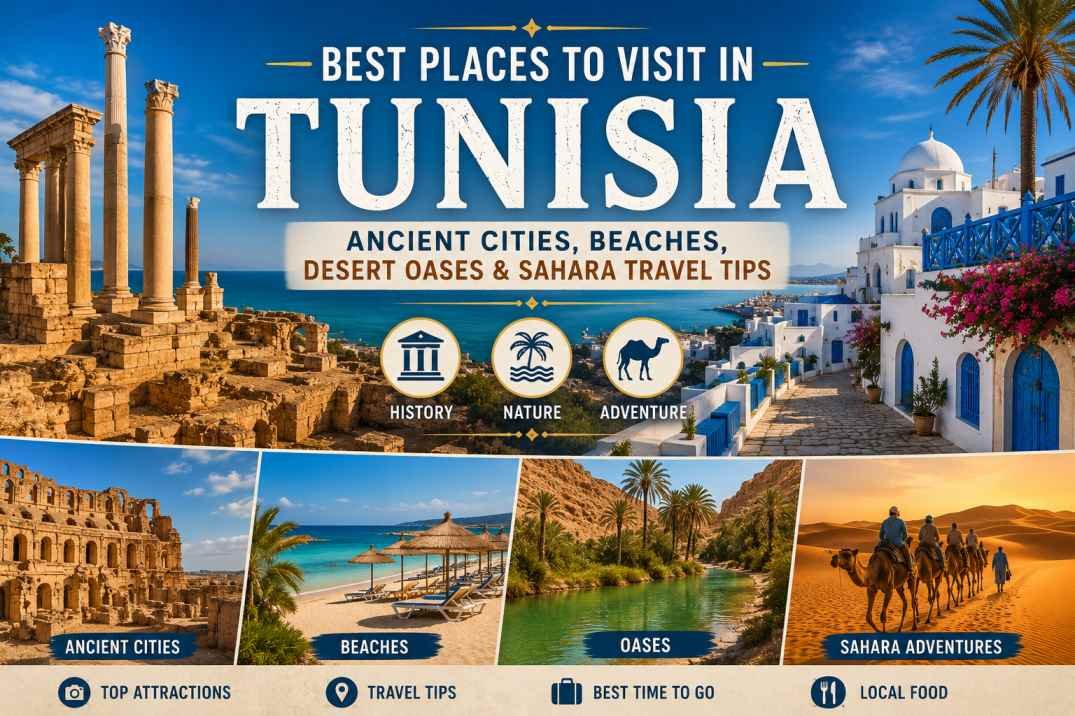
Tunisia is one of the most rewarding countries to visit in North Africa. It combines Mediterranean beaches, Roman ruins, Islamic architecture, blue-and-white villages, desert oases, Sahara dunes, traditional souks and island culture in one compact destination.
This guide covers the best places to visit in Tunisia, with practical tips, travel videos, itinerary ideas and advice for first-time visitors.
Why visit Tunisia?
Tunisia is ideal for travelers who want history, beaches and desert landscapes without needing a very long trip. You can visit ancient Carthage, walk through the Medina of Tunis, photograph Sidi Bou Said, explore the Roman amphitheatre of El Jem, relax in Hammamet or Djerba, and continue south toward Tozeur, Douz and the Sahara Desert.
Quick Tunisia travel tips
- Best for: history, beaches, culture, desert trips, photography and affordable travel.
- Best time to visit: spring and autumn for sightseeing; summer for beach holidays.
- Recommended trip length: 7 to 10 days for a balanced north-to-south itinerary.
- Good first route: Tunis → Carthage → Sidi Bou Said → Sousse → El Jem → Kairouan → Djerba or Tozeur → Douz.
- Travel style: combine trains, private drivers, tours and domestic flights depending on time.
1. Tunis: the best starting point
Tunis, the capital of Tunisia, is the best place to begin your journey. It gives you a strong introduction to the country: old medina streets, French-influenced avenues, markets, cafés, museums and easy access to Carthage and Sidi Bou Said.
The Medina of Tunis is a UNESCO World Heritage site and one of the most atmospheric old towns in North Africa. Walk through its narrow streets, shop for handicrafts, look for traditional doors and visit historic monuments from the outside when access is restricted.
Tips for visiting Tunis
- Stay near the Medina, downtown Tunis or La Marsa if you want easy access to cafés and transport.
- Visit the Medina in the morning when shops are opening and the streets are more comfortable.
- Use Tunis as a base for Carthage, Sidi Bou Said and La Marsa.
- Keep small cash for taxis, cafés and souks.
- Dress modestly in traditional areas and religious surroundings.
- For photos, look for decorated doors, tiled courtyards and rooftop cafés.
2. Carthage: ancient ruins by the sea
Carthage is one of the most important ancient sites in the Mediterranean. Once a powerful Phoenician city and later a major Roman settlement, today it is a collection of archaeological areas spread along the coast near Tunis.
The most famous stops include the Antonine Baths, Byrsa Hill, Roman villas and sea-facing ruins. Carthage is especially interesting for travelers who love ancient history, archaeology and coastal views.
Tips for visiting Carthage
- Allow at least half a day because the ruins are spread across several areas.
- Combine Carthage with Sidi Bou Said on the same day.
- Wear comfortable shoes because you will walk between large archaeological zones.
- Bring water, sunscreen and a hat, especially from May to September.
- Start early or visit late afternoon for softer light and fewer crowds.
- Use a guide if you want to understand the Punic and Roman history properly.
3. Sidi Bou Said: Tunisia’s blue-and-white village
Sidi Bou Said is one of the most beautiful places in Tunisia. The village is known for its white houses, blue doors, bougainvillea, sea views, art galleries and relaxed café culture.
It is often compared to Mediterranean island villages, but Sidi Bou Said has its own Tunisian identity. It is perfect for photography, slow walks and sunset views over the Gulf of Tunis.
Tips for visiting Sidi Bou Said
- Go early morning for quiet streets or late afternoon for sunset views.
- Try mint tea with pine nuts at a traditional café.
- Wear comfortable shoes because the streets are steep and paved.
- Respect residents when taking photos near private homes.
- Avoid peak weekend hours if you want better photos.
- Pair it with Carthage for the easiest day trip from Tunis.
4. El Jem: the Roman amphitheatre
The Amphitheatre of El Jem is one of Tunisia’s most impressive landmarks. This huge Roman amphitheatre is a UNESCO World Heritage site and one of the best-preserved Roman arenas in the world.
El Jem is a must-visit for history lovers. You can walk through underground passages, climb the upper levels and imagine the scale of Roman life in ancient Thysdrus.
Tips for visiting El Jem
- Visit early morning to avoid heat and tour groups.
- Bring water because the site is exposed to sun.
- Do not skip the underground chambers.
- Climb to the higher levels for the best views and photos.
- El Jem works well as a stop between Sousse, Monastir, Sfax or Kairouan.
- Plan around 1.5 to 2 hours for a relaxed visit.
5. Kairouan: spiritual and architectural heritage
Kairouan is one of Tunisia’s most important historic cities and a major center of Islamic heritage. Its medina, Great Mosque, Aghlabid Basins and traditional carpet workshops make it one of the most culturally rich places in the country.
The city is quieter than Tunis or Sousse, which makes it excellent for travelers who want architecture, history and local atmosphere.
Tips for visiting Kairouan
- Dress modestly, especially around religious sites.
- Check access rules before entering mosque areas because some sections may be restricted to Muslims.
- Visit the Great Mosque exterior and courtyard respectfully.
- Look for traditional carpets, but compare prices before buying.
- Combine Kairouan with El Jem or Sousse if you have a driver.
- Try local pastries, especially makroud, a famous semolina and date sweet.
6. Sousse: beach city with a UNESCO medina
Sousse is one of Tunisia’s best destinations for travelers who want both history and beach time. The Medina of Sousse is a UNESCO World Heritage site, while the coast offers resorts, restaurants and easy access to Port El Kantaoui.
Sousse is a practical base if you want to visit El Jem, Monastir, Kairouan or Hammamet.
Tips for visiting Sousse
- Visit the medina in the morning, then relax by the beach in the afternoon.
- Stay near the beach if you want resort comfort, or near the medina for culture.
- Visit the Ribat for city views and historical atmosphere.
- Use Sousse as a base for day trips to El Jem and Monastir.
- Port El Kantaoui is better for marina walks, family hotels and organized activities.
- Negotiate politely in souks, but do not feel pressured to buy.
7. Hammamet: beaches, medina and Cap Bon
Hammamet is one of Tunisia’s classic beach destinations. It is known for sandy beaches, turquoise water, resorts, gardens, a small medina and easy access to the Cap Bon peninsula.
It is a good choice for couples, families and travelers who want a softer holiday with beach time and short cultural excursions.
Tips for visiting Hammamet
- Choose Hammamet for relaxation rather than fast sightseeing.
- Visit the old medina and kasbah for sea views.
- Yasmine Hammamet is better for resorts and organized tourism.
- Old Hammamet has more charm and traditional atmosphere.
- Use it as a base for Nabeul, Cap Bon, Tunis or Sousse.
- Summer is best for beaches, while spring and autumn are better for walking.
8. Djerba: island culture, beaches and villages
Djerba is Tunisia’s most famous island destination. It offers long beaches, whitewashed villages, markets, traditional architecture, street art in Djerbahood, pottery workshops and a relaxed island rhythm.
Djerba is especially good for travelers who want beach time, cultural villages and access to southern Tunisia.
Tips for visiting Djerba
- Stay near Midoun or the beach zone for resorts and easy transport.
- Visit Houmt Souk for markets, crafts and local food.
- Explore Djerbahood for street art and village photography.
- Rent a car or hire a driver if you want to see the island properly.
- Try seafood, brik and local Tunisian dishes.
- Djerba can also be used as a base for Matmata, Tataouine or desert excursions.
9. Tozeur and the desert oases
Tozeur is one of the best places in Tunisia for desert landscapes, palm groves and oasis culture. It is famous for its brick architecture, date palms and access to Chebika, Tamerza, Mides and the Chott el Djerid salt lake.
This is the right destination if you want a completely different side of Tunisia after the coast and ancient cities.
Tips for visiting Tozeur
- Book a 4×4 tour for Chebika, Tamerza, Mides and desert viewpoints.
- Visit the old medina area to see traditional brick patterns.
- Try Deglet Nour dates, one of the region’s famous products.
- Bring sunglasses because the desert light is strong.
- Go early for oasis and canyon visits, especially in warmer months.
- Pack layers because desert nights can be cool.
10. Douz and the Sahara Desert
Douz is often called a gateway to the Sahara Desert. It is the place to arrange camel rides, desert camps, dune excursions and Sahara sunset experiences.
For many travelers, Douz is the most memorable part of a Tunisia itinerary because it offers real desert atmosphere beyond the beach resorts and historical cities.
Tips for visiting Douz and the Sahara
- Book desert activities with reputable guides or hotels.
- For the best experience, consider one night in a desert camp.
- Bring sunscreen, a hat, sunglasses and a scarf for wind and sand.
- Pack warm clothes for the evening and early morning.
- Do not underestimate travel distances in southern Tunisia.
- Combine Douz with Tozeur, Chott el Djerid, Matmata or Ksar Ghilane.
Best Tunisia itinerary for first-time visitors
3-day Tunisia itinerary
- Day 1: Tunis Medina and downtown Tunis.
- Day 2: Carthage, Sidi Bou Said and La Marsa.
- Day 3: Bardo Museum if open, or Hammamet day trip.
7-day Tunisia itinerary
- Day 1: Tunis.
- Day 2: Carthage and Sidi Bou Said.
- Day 3: Hammamet or Sousse.
- Day 4: El Jem and Kairouan.
- Day 5: Djerba or Tozeur.
- Day 6: Desert oases or Sahara excursion.
- Day 7: Return to Tunis or continue south.
10-day Tunisia itinerary
- Days 1-2: Tunis, Carthage, Sidi Bou Said.
- Days 3-4: Hammamet, Sousse, Port El Kantaoui.
- Day 5: El Jem and Kairouan.
- Days 6-7: Djerba.
- Days 8-9: Tozeur, Chebika, Tamerza, Chott el Djerid.
- Day 10: Douz, Matmata or return route.
Frequently asked questions about visiting Tunisia
What is the most beautiful place in Tunisia?
Sidi Bou Said is one of the most beautiful places in Tunisia for photography and sea views, while Tozeur and Douz are best for desert landscapes.
How many days do you need in Tunisia?
You can see Tunis, Carthage and Sidi Bou Said in 3 days, but 7 to 10 days is better if you want beaches, ancient ruins and the Sahara Desert.
Is Tunisia good for a beach holiday?
Yes. Hammamet, Sousse, Monastir, Mahdia and Djerba are popular for beach holidays.
What is the best month to visit Tunisia?
April, May, September and October are usually excellent for sightseeing because the weather is warmer than winter but not as hot as midsummer.
Can you visit the Sahara Desert in Tunisia?
Yes. Douz, Tozeur, Ksar Ghilane and surrounding desert areas are popular gateways for Sahara excursions.
Related links
- World Travel Guide
- Read the Indonesian version: Tempat Wisata Terbaik di Tunisia
- Official Tunisia Tourism
- UNESCO World Heritage Sites in Tunisia
Travel Guide By Destination : Africa, Americas, Asia, Australia, Europe, Middle East